
BOARD EXAMS · FOCUS & ROUTINE · 2027 PREPARATION
How to Overcome Procrastination During Board Exam Preparation
A practical, student-friendly approach to starting on time, managing distractions, building manageable routines and preparing for 2027 board exams without last-minute panic.
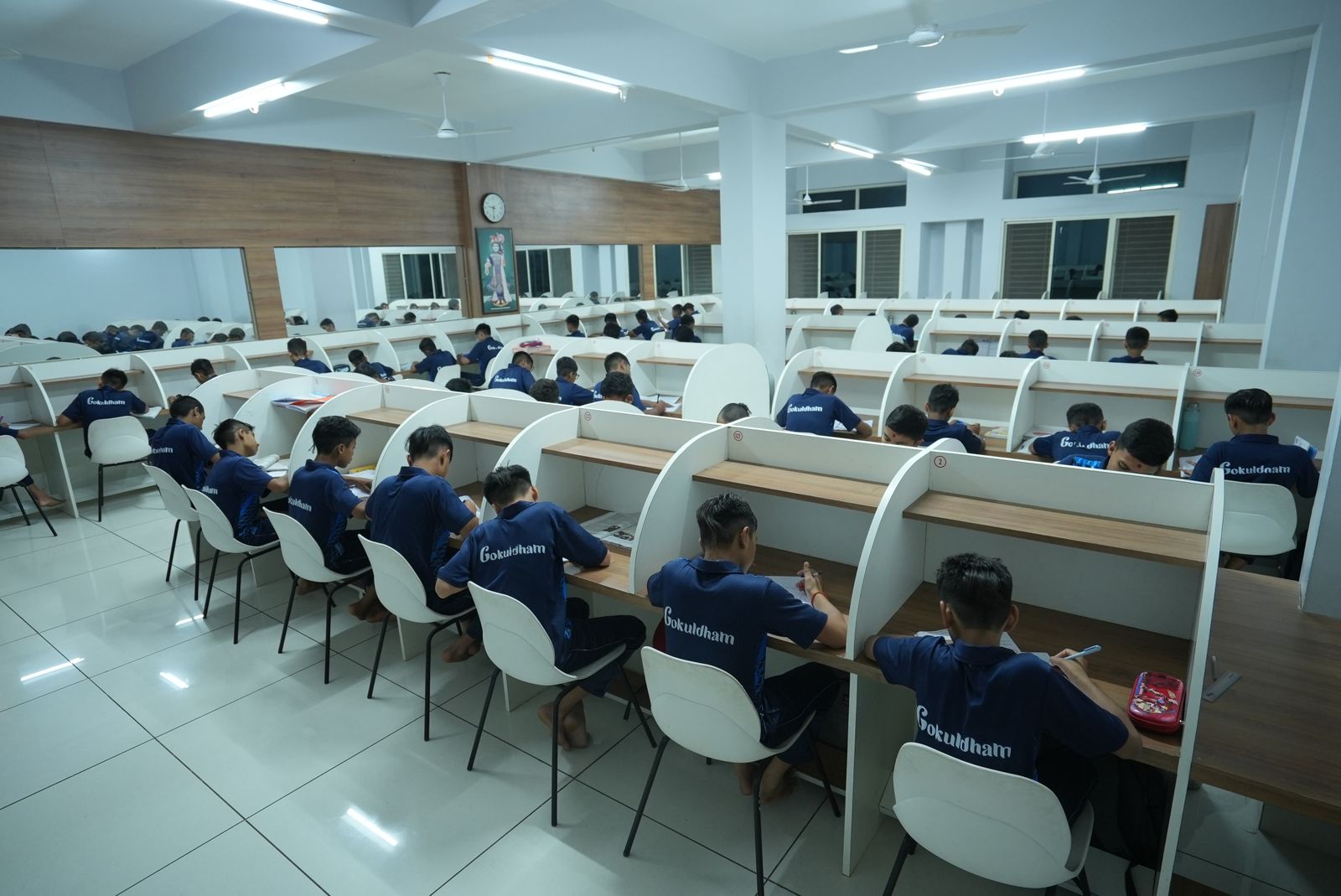
Real Indian students studying in Gujarat; the photograph illustrates an ordinary study setting, not a documented exam-preparation method.
How can students stop procrastinating during board exams?
Start with a task small enough to begin now, give it a defined time slot, put distractions away, and check one learning outcome when you finish. For example, instead of “finish Chemistry,” choose “revise two reaction mechanisms and answer four questions in 25 minutes.” Repeat this with sensible breaks and weekly review. Procrastination can be linked to worry, boredom, perfectionism or unclear tasks—not simply a lack of discipline.
| When you notice… | Try this first | Check progress by… |
|---|---|---|
| “The syllabus is too big.” | Choose one subtopic and a 15–25 minute block. | Answer two questions without notes. |
| “I keep checking my phone.” | Mute alerts and put the device out of reach for one block. | Record one uninterrupted session. |
| “My notes need to be perfect.” | Make a rough first draft; improve it after testing recall. | Find and correct one knowledge gap. |
| “I missed yesterday.” | Restart with five minutes instead of doubling today’s workload. | Complete one small task today. |
Open your next chapter, write down the first question you need to answer, and study for just five minutes. You can continue if you feel able; a small start still counts.
Why do students procrastinate before board exams?
Procrastination means unnecessarily delaying an intended task even though the delay may have negative consequences. Students can avoid a chapter because they expect it to be confusing, fear a poor score, feel tired or do not know where to start. The temporary relief of postponing is real, but it rarely fixes the underlying problem.
- Fear of difficult topics: “If I start, I will discover what I don’t understand.”
- Unclear priorities: “There are so many chapters that I cannot choose.”
- Perfectionism: “My notes must look perfect before I can practise.”
- Digital interruptions: notifications and endless scrolling break up time.
- Exhaustion: an overcrowded timetable leaves little recovery time.
The American Psychological Association explains that procrastination often operates as a response to unpleasant emotions rather than simple laziness. See the APA discussion of procrastination and emotional avoidance.
Understand the procrastination cycle before trying to break it
Many students experience the same loop: a task feels stressful → they avoid it → avoidance brings brief relief → the remaining workload grows → stress rises the next time. The goal is not to shame yourself for delaying. It is to make the next step clearer and less intimidating.
| Moment | What you might think | Helpful response |
|---|---|---|
| Before starting | “I need to feel motivated first.” | “I can do a five-minute start.” |
| During a difficult task | “I will never understand this.” | “I can isolate the first example or question.” |
| After a missed session | “Today is ruined.” | “I can reschedule one realistic task.” |
What does procrastination actually cost during exam preparation?
Repeated last-minute studying can compress revision, reduce opportunities to identify misunderstandings and make timed practice harder to fit in. For some students, this may add to worry and fatigue; the effects vary from person to person.
- Less time to revisit weak chapters and check corrections.
- More rushed decisions about which questions to attempt.
- Fewer chances to practise with an official marking scheme.
- A higher temptation to cut sleep or breaks to “catch up”.
Trying to recover an entire week of delayed study in one evening usually creates another unrealistic target. Rebuild the plan using the time you actually have.
Replace waiting for motivation with a flexible study system
A simple routine reduces the number of decisions needed to get started. Choose a study window that fits school, commute, food and rest. You do not need identical hours every day; use a dependable starting cue and adjust when your schedule changes.
- Choose a repeatable start time, such as after a snack and a short rest.
- List one priority subject and one back-up task.
- Prepare the textbook, notebook and question sheet beforehand.
- Finish with a short recall check and choose the next starting point.
For practical scheduling ideas, read our board-exam daily study routine and digital planner and habit-tracking guide.
Break big chapters into small tasks that have clear finish lines
“Study the entire Organic Chemistry chapter” is too broad for a single session. Identify one definable piece and one output that shows understanding. Different subjects need different outputs: worked steps for Maths, diagrams for Biology or a few structured points for History.
| Subject | Overwhelming plan | Startable micro-task |
|---|---|---|
| Chemistry | Finish all organic reactions | Learn two reactions, then solve three questions. |
| Mathematics | Revise trigonometry | Solve four named problem types and check errors. |
| Economics | Master national income | Explain two key terms and solve one numerical. |
| English | Finish the entire literature unit | Summarise one scene and write one short answer. |
Use time blocks instead of an open-ended study session
Pick a manageable focus block and a short break. The source article suggests 45–50 minutes of study followed by a 10-minute break; that is a possible schedule, not a universal rule. If starting feels hard, try 10 or 20 minutes first and increase gradually.
| Study stage | Example time | Purpose |
|---|---|---|
| Set up | 2 minutes | Write one exact learning goal. |
| Focus | 25 minutes | Read, practise or recall a defined topic. |
| Check | 5 minutes | Mark answers and note the next gap. |
| Break | 5–10 minutes | Move, drink water and reset. |
Timers are tools, not marks of success. A short focused session is preferable to a long session spent switching between apps.
Make tomorrow easier the night before
Preparation can remove a surprising amount of morning hesitation. Before bed, take three minutes to choose tomorrow’s first subject, open the relevant page or question and leave the necessary materials together. Avoid extending this into an hour of elaborate planning.
- Write tomorrow’s single most important task in one sentence.
- Mark the chapter page or exact question numbers.
- Keep notebooks, calculator and stationery within reach.
- Choose a practical start time and a simple back-up time.
The aim is a fast start—not a perfectly decorated planner.
Control phone distractions without banning useful digital learning
A phone can be necessary for a lecture, an e-book or an educational app. The problem is uncontrolled switching between learning and notifications. Decide before each session whether the phone is a learning tool or a distraction, and arrange the space accordingly.
- Offline question practice: leave the phone outside arm’s reach.
- Video explanation: play the selected lesson, then close unrelated apps.
- Study timer: use a basic clock if a phone timer tempts scrolling.
- Notifications: silence non-urgent alerts during a defined block.
More practical options appear in digital minimalism for students.
Stop waiting for perfect notes or a perfect mood
Perfectionism can disguise procrastination: students repeatedly organise notebooks rather than check what they remember. Replace a “perfect first attempt” with a sequence of rough understanding, practice and correction.
- Read one explanation or worked example.
- Close it and explain the core idea in your own words.
- Attempt a related question.
- Correct gaps using the textbook or marking scheme.
Notes are useful when they support learning. A plain notebook page with corrected errors can be more valuable than a beautiful page that has never been tested.
Switch from passive reading to active study
Active recall and solving questions create clearer evidence of learning than simply turning pages. Try answering from memory, explaining a method aloud or completing a short question set. When you finish, correct the mistakes before moving on.
- Write two questions from each textbook subheading.
- Attempt short previous-year or official sample-paper questions.
- Explain a difficult concept without looking at the answer.
- Keep a small list of errors that you need to revisit.
For targeted practice, see science-backed revision strategies and how to master NCERT for boards.
Create a two-minute start ritual
Starting is often the point where students feel the strongest resistance. Repeat a brief routine—sit down, open the right page, write the first question and set a short timer. It creates a recognizable beginning without requiring you to feel inspired.

- Clear only enough desk space for one subject.
- Write the next task at the top of the page.
- Commit to just five minutes of work.
- Continue if possible, or schedule the next small attempt.
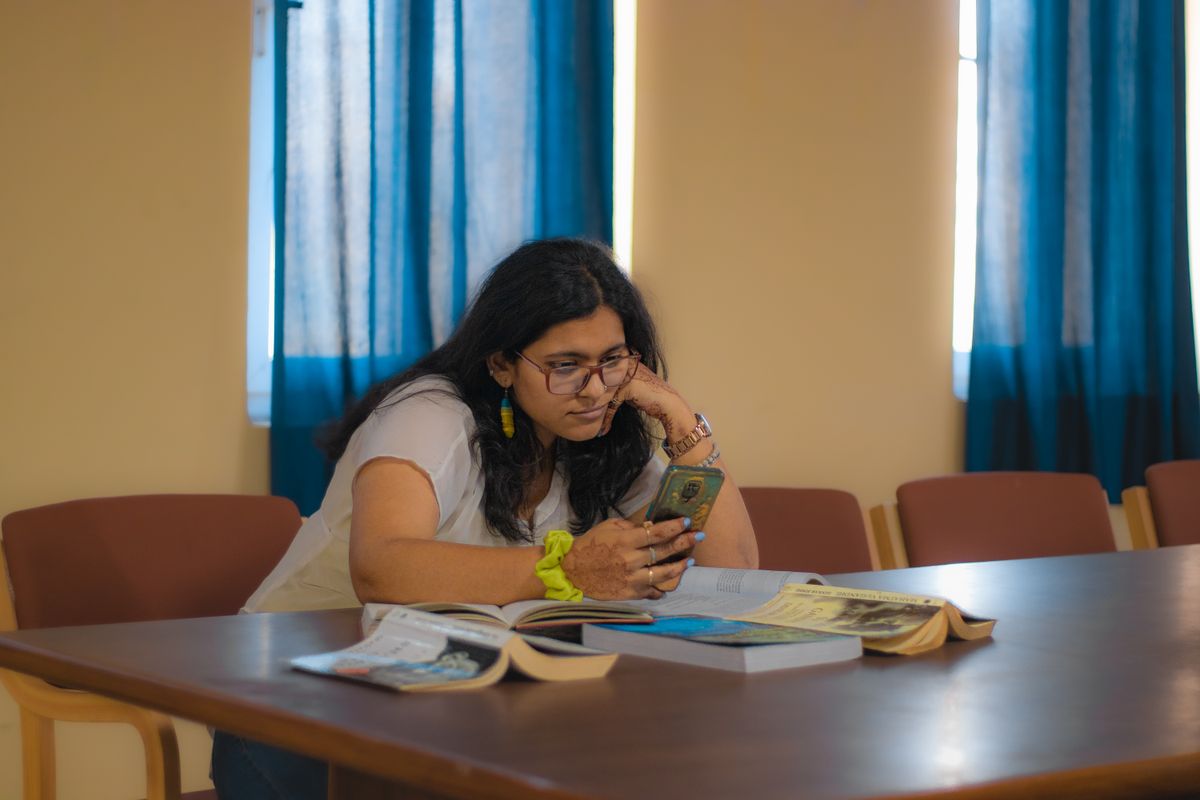
The photograph shows focused reading in a Delhi library; it is an illustration of an ordinary study setting, not a claim about the student’s habits.
Try an “if–then” plan for your hardest obstacle
An implementation intention links a predictable obstacle to a specific response. For example, “If I want to check social media before finishing my Maths problems, then I will put my phone on the shelf and complete one more question.” Keep the plan realistic and under your control.
| If this happens… | Then I will… |
|---|---|
| I feel overwhelmed opening Physics | Read the first worked example and write down the given values. |
| I reach for my phone | Place it face down away from the desk until the timer ends. |
| I miss a study session | Restart with 10 minutes at my next available time. |
| I get stuck for several minutes | Mark the question and request an explanation or attempt another one. |
A 2026 trial of implementation-intention techniques with university students reported promising effects on task initiation; findings from undergraduates should not be treated as guaranteed outcomes for Indian board-exam students.
Track completed learning tasks—not your mood or a study-hour contest
Visible progress is more useful when the record describes learning instead of just time. At the end of a session, tick the task, write what you could answer and record one error to fix. A short weekly review can help rebalance subjects.
| Date | Planned task | Evidence completed | Next step |
|---|---|---|---|
| Monday | Revise three Biology diagrams | Drew two correctly from memory | Correct the third diagram. |
| Tuesday | Solve six equations | Four correct; two calculation errors | Reattempt the two errors. |
| Wednesday | Read one Business Studies topic | Wrote five points without notes | Use one case-study question. |
What should you do after an unproductive or missed day?
One missed session does not erase earlier work. Acknowledge the gap, find out whether the problem was tiredness, poor timing or a task that was too large, and restart at the next realistic opportunity. Avoid extra punishment sessions or comparing your day with someone else’s timetable.
- Reschedule urgent work by importance, not by guilt.
- Choose one five- to ten-minute restart task.
- Keep meals, sleep and breaks in the plan.
- Ask a teacher or friend for help if you are blocked by a concept.
If low motivation frequently interrupts study, the related guide how to study smart instead of hard covers a broader routine-based approach.
Protect sleep, breaks and energy during board preparation
Study delay can be worsened by fatigue. A timetable that removes sleep, meals and leisure is unlikely to be sustainable. Short movement breaks, regular meals and sufficient rest support concentration and make the next session easier to begin.
- Set a consistent sleep and wake schedule when possible.
- Include breaks between demanding study blocks.
- Leave time for a small walk or other physical activity.
- Do not try to make up lost hours by routinely studying through the night.
The CDC guidance on adolescent sleep notes that ages 13–18 generally need 8–10 hours of sleep. Students with persistent sleep difficulties or severe anxiety should seek support from a trusted adult or qualified professional.
Build a 2027 plan using your actual board syllabus and sample papers
For CBSE students preparing for 2027 examinations, the official academic session is 2026–27. Check your precise subjects before dividing chapters into study blocks. CBSE’s sample question papers and marking schemes are useful for choosing question types and reviewing answers. Other boards should use their own official resources.
| Official source | What it helps you do |
|---|---|
| CBSE 2026–27 curriculum | Check the subject-wise syllabus and requirements. |
| Class 10 sample papers | Practise the question formats and marking approach. |
| Class 12 sample papers | Use subject-specific questions and marking schemes. |
The board’s later notifications may change administrative details. Use the current official notices rather than guessing a 2027 date sheet or relying on an old sample paper.
Use mock-test mistakes to decide tomorrow’s task
A mock test is most useful when followed by a practical correction plan. If you lost marks on calculations, choose a small numerical practice task. If answers were incomplete, practise the missing explanation and compare it with the official marking scheme.
- Identify three errors that appeared repeatedly.
- Classify each as concept, misunderstanding, calculation or time pressure.
- Turn one error into tomorrow’s first practice task.
- Reattempt the same type of question a few days later.
See online mock test platforms and board exam preparation mistakes to avoid for connected strategies.
Use a study friend for accountability, not comparison
A trusted classmate can help you begin on time, discuss a hard topic or check that your work is complete. A useful accountability arrangement is a brief daily update—not exchanging exaggerated hour counts or competing over who sleeps the least.

- Tell a study partner your one priority for the day.
- Share a photo of solved questions or a short concept explanation only when you are comfortable.
- Ask for help on a specific doubt rather than “the entire chapter”.
- Review what worked at the end of the week.
For more ideas, see the benefits of group study and online tools.
Subject-wise examples: Science, Maths, Commerce and Humanities
The most useful anti-procrastination task depends on the type of thinking required. Match your first step to how that subject is assessed.
| Subject | Five-minute start | Follow-up task |
|---|---|---|
| Physics / Maths | Write the given values and formula. | Solve three related problems; check units and signs. |
| Biology | Sketch one labelled structure. | Explain a process from memory. |
| Accountancy | Prepare one short journal-entry example. | Practise a similar question with correct workings. |
| Economics | Define two terms. | Draw and explain one relevant graph. |
| History / Political Science | List a question’s command word and two points. | Draft a structured short answer with evidence. |
A realistic seven-day plan to reduce study procrastination
Use this starter schedule as a flexible example, not a mandatory timetable. Adjust the number of sessions to your classes, subjects, family commitments and energy.
| Day | One practical action | Evidence to keep |
|---|---|---|
| Day 1 | List your three most-avoided chapters and choose the smallest task. | One completed subtopic. |
| Day 2 | Use one 25-minute focus block, away from notifications. | Two solved questions. |
| Day 3 | Prepare tomorrow’s materials and first task at night. | A ready-to-start notebook. |
| Day 4 | Use active recall after a short reading session. | Five points recalled without notes. |
| Day 5 | Try an if–then plan for a repeated distraction. | Note whether the response helped. |
| Day 6 | Attempt a small official sample-paper section. | Three errors corrected. |
| Day 7 | Review progress, rest and plan two realistic priorities. | A flexible plan for next week. |
If you are exhausted or unwell, rest is the priority. A sustainable routine includes recovery and does not require being productive every hour.
When procrastination may need more than a study timetable
Sometimes frequent avoidance accompanies significant anxiety, low mood, attention difficulties or other circumstances that are not solved simply by a planner. This article is educational guidance, not a diagnosis. If procrastination is seriously disrupting school, sleep or daily life, tell a parent, trusted teacher, school counsellor or healthcare professional.
Support can include adapting the workload, getting help with difficult subjects, addressing stress or discussing ongoing concentration problems. Do not label yourself lazy because a study technique did not work immediately.
You can also read our exam stress and anxiety guide and preparing without burnout.
Frequently asked questions about study procrastination
These short answers address common questions from Indian board-exam students.
How can I stop procrastinating when board exams are near?
Choose one high-priority topic, begin with a five-minute task, use a short focused session and check what you learned. Then make a realistic plan for the remaining chapters; do not attempt to catch up everything overnight.
Why do I procrastinate even when I want good marks?
A task can feel overwhelming, boring or frightening, so delaying it offers short-term relief. Lack of sleep, unclear priorities and distractions can also contribute. The best response depends on your actual obstacle.
What is the five-minute rule for studying?
Commit to beginning a specific small study task for five minutes. You may continue after that, but the first goal is to overcome the starting barrier rather than force a long session.
Is a 45-minute study block better than 25 minutes?
Neither length is universally best. Try a shorter block if you have difficulty beginning and extend it when the task and your concentration allow. Include realistic breaks.
How do I avoid using my phone instead of studying?
Decide whether you need the phone for that session. If not, silence alerts and keep it away. If you need it for a lesson, open only the required resource and close distracting apps.
Can I finish the full syllabus in the last month?
That depends on how much is left, your available time, subjects and existing understanding. Prioritise the official syllabus, weaker high-importance topics, revision and practice; do not assume a guaranteed outcome.
How do I stop delaying difficult Maths and Science chapters?
Break the topic into one example, a formula or a short practice set. Attempt the parts you know, identify the precise step where you get stuck and ask for help on that step.
What if I waste a whole day before a board exam?
Do not respond by cutting all your sleep. Choose one urgent task, complete what is realistic and reschedule the rest. Restarting is more useful than treating a missed day as a complete failure.
Is procrastination the same as laziness?
No. Procrastination is delaying an intended task despite possible negative effects. It may be related to unpleasant emotions, unclear tasks or other difficulties, so treating every case as laziness is misleading.
How should I track study progress?
Record what you completed, whether you could answer questions without notes and which errors were corrected. Hours studied are less informative on their own.
Where can I find 2027 CBSE sample papers?
CBSE has published 2026–27 Class 10 and Class 12 sample question papers and marking schemes on its official academic website. Choose your subject and verify any later updates.
Can a study plan cure exam anxiety or persistent procrastination?
No. A realistic plan may reduce uncertainty for some students, but severe or persistent anxiety and difficulties with daily functioning deserve support from a trusted adult or qualified professional.
Final takeaway: make starting easy and returning normal
You do not need to become perfectly disciplined overnight to make progress. Procrastination can improve when intimidating tasks become small actions, distractions have boundaries, and recovery is part of your schedule. Start with the next question rather than the whole syllabus.
Today, choose one topic, study it briefly, test yourself and write tomorrow’s first step. A workable routine is built through repeated, reasonable starts—not fear, punishment or last-minute all-nighters.