
Student wellbeing • Study skills • Exam preparation
How to Reduce Exam Stress and Anxiety Using Science-Based Methods and Mobile Apps
Exam stress is easier to manage when you work on both sides of the problem: calm the body and make preparation more predictable. A strong routine can combine regulated breathing or mindfulness, active recall with spaced revision, realistic focus blocks, adequate sleep, regular movement, mock-test exposure and a small number of useful apps. No single app or breathing count is a cure; the goal is a repeatable system that reduces uncertainty and protects attention.
Exams can place students under real pressure. You may be trying to perform well, manage limited time, remember a large syllabus and meet expectations at the same time. A manageable level of arousal can sometimes increase alertness, but high test anxiety is consistently linked with poorer academic performance across many studies. The most important distinction is not whether you feel any stress, but whether stress is beginning to disturb sleep, concentration, memory, appetite, mood or daily functioning. [1]
This guide keeps the practical strengths of the original Mass Graduates article—breathing, meditation, active recall, spaced revision, time management, healthy habits, visualisation, mobile apps, mock practice and exam-room techniques—while separating well-supported evidence from popular but less-proven claims.
What Exam Stress Can Do to Focus, Memory and Sleep
Exam stress has both psychological and physiological components. When you perceive a situation as threatening or high-stakes, the body activates stress-response systems. Cortisol is one part of that response. It is not accurate to say that cortisol is simply “bad”; it has normal biological functions. However, experimental research shows that acute stress can impair long-term memory retrieval under some conditions, especially when the stress response occurs shortly before recall. The effect is not identical for every person or every situation. [2]
Students often notice the effects in everyday ways: racing thoughts, irritability, difficulty settling to sleep, tiredness, a “blank mind” during recall, poor concentration, procrastination, changes in appetite or physical tension. These signs do not automatically mean a mental-health disorder, but they are useful signals that the preparation routine needs adjustment.
The practical lesson is simple: stress management and study strategy should not be treated as separate topics. A calm body with an unstructured study plan can still create panic; a perfect timetable with chronic sleep loss can still damage attention. The most useful approach combines both.
Science-Based Methods to Manage Exam Stress
1. Meditation and Regulated Breathing
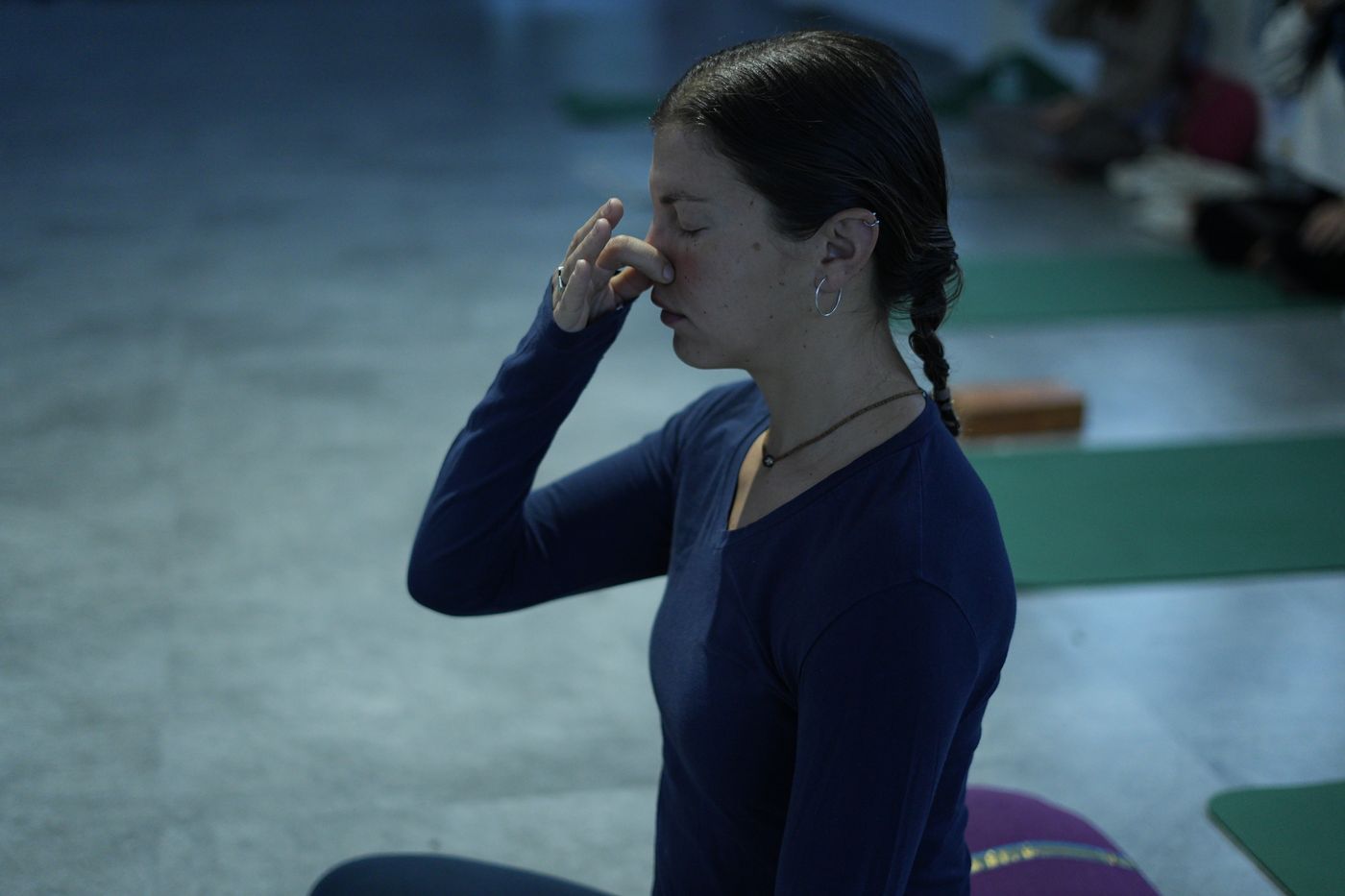
Mindfulness and regulated breathing can help students reduce the intensity of stress responses. A 2024 meta-analysis of 18 primary studies involving 1,275 participants found that mindfulness-based interventions were associated with lower test anxiety, although the researchers also reported very high variation between studies and possible publication bias. That means mindfulness is promising, not a guaranteed result for every student. [3]
Regulated breathing also has a broader evidence base for stress and anxiety reduction. A 2023 systematic review examined 58 clinical studies of breathing practices; many interventions improved stress or anxiety measures, particularly when the practice was repeated and not limited to very brief, fast-only breathing. [4]
- Start with 5–10 minutes of slow, comfortable breathing or a guided mindfulness session. Consistency matters more than doing a long session once.
- A longer exhale than inhale often feels calming. The familiar 4-7-8 pattern—inhale for 4 seconds, hold for 7, exhale for 8—can be used if it feels comfortable, but the evidence supports regulated breathing in general more strongly than this exact count.
- Do not force long breath-holds. If you feel light-headed or uncomfortable, return to normal breathing.
- Pairing a brief mindfulness session with a short walk can be a practical transition between study blocks.
Apps such as Headspace and Calm currently offer guided meditation, breathing and stress-management content. Treat them as structured practice tools—not as substitutes for professional care when anxiety is severe.
2. Active Recall and Spaced Revision
Passive rereading can create a feeling of familiarity without proving that you can retrieve the information. Active recall does the opposite: you close the book, answer a question, solve a problem, explain a concept from memory or write what you remember before checking the source.
Retrieval practice has a strong evidence base for long-term retention compared with restudying. Spacing—returning to material after a delay—can strengthen retention in many settings, although classroom effects are not equally large in every subject or course. A 2024 multi-course study found positive overall effects but also substantial variation across STEM courses. [5]
- After studying a topic, close the notes and write the key points from memory.
- Use practice questions rather than simply highlighting the same pages again.
- Revisit difficult material after a delay. The original article’s example—two days later, then five days later, then weekly—is a useful starting template, not a universal rule.
- Increase the gap when recall is strong; shorten the gap when you repeatedly forget.
Anki can schedule flashcard reviews based on recall, while Quizlet can support flashcards and other study modes. The quality of the learning still depends on the questions you create and whether you actively retrieve rather than merely flip through cards.

3. Organised Study and Time Management
Unstructured study creates a second source of stress: you are not only learning difficult material, you are also repeatedly deciding what to do next. A simple plan reduces that decision load.
The Pomodoro technique is a practical timing structure rather than a medical treatment. The original 25–30 minute focus block followed by a 5-minute break is a reasonable starting point. After about four sessions, a longer 15–20 minute break can help you reset. Some students can focus for longer; others may need shorter blocks. The best interval is the one that helps you work consistently without turning breaks into long distractions.
After about four focus blocks, take a longer 15–20 minute break if that rhythm works for you.
- Place your hardest subject or most demanding task in the part of the day when your concentration is usually strongest.
- Keep a small buffer in the timetable for unexpected topics, school work or revision delays. A schedule that has no flexibility often becomes a new source of anxiety.
- End each study block with one visible outcome: a solved set, a one-page recall sheet, a completed topic or a list of mistakes to repair.
For Class 12 students balancing two preparation tracks: Mass Graduates’ guide to balancing CUET and Board exam preparation
4. Sleep, Nutrition and Physical Activity
Sleep is not “time lost from studying.” Sleep supports learning, memory formation, attention and emotional regulation. The original article used a single 7–9 hour recommendation, but students span different age groups, so one range is not appropriate for everyone.
| Student age | Evidence-based sleep guidance | Exam-period takeaway |
|---|---|---|
| Teenagers aged 13–18 | 8–10 hours per 24 hours on a regular basis [6] | Avoid all-nighters; protect a consistent sleep window, especially before high-stakes exams. |
| Adults aged 18+ | At least 7 hours per night on a regular basis [7] | Most college students still need substantial sleep; extra sleep may be appropriate for some young adults. |
A balanced diet with regular meals, protein sources, complex carbohydrates, fruits, vegetables and healthy fats can make long study days easier to sustain. Avoid turning nutrition into another source of perfectionism. The practical goal is stable energy and hydration.
Caffeine can increase alertness, but high doses or late-day use may worsen jitteriness and sleep. Similarly, a short-term sugar boost is not a replacement for regular meals and rest.
Physical activity can also help. Recent meta-analyses in college students and young people suggest structured exercise can reduce anxiety symptoms, although the size of the benefit varies across studies and exercise types. [8] A 20–30 minute walk, stretching session or yoga break can therefore be useful, especially when it replaces sedentary scrolling between study sessions.
5. Visualisation, Goal Setting and Progress Tracking
The original article recommends visualising a successful exam. That can be useful when it is used as mental rehearsal rather than fantasy. Picture the controllable sequence: arriving prepared, reading instructions slowly, beginning with a manageable question, noticing anxiety without panicking and returning attention to the paper.
Combine that rehearsal with small, measurable goals. “Finish the whole syllabus today” is vague and overwhelming. “Revise electrochemistry notes, answer 20 questions and list my five recurring errors” is concrete. Breaking a large task into smaller steps creates visible progress and makes it easier to restart after a difficult session.
- Choose one chapter or topic for each focused session.
- Write down what was completed, not only what remains.
- At the end of the day, note one improvement and one next step. This preserves the original article’s idea of nightly reflection while making it specific and actionable.
Mobile Apps That Can Help Reduce Exam Overload
Technology can be a useful companion when it reduces friction. It becomes counterproductive when you install too many tools, constantly customise systems or use “study apps” as another form of procrastination. Choose the minimum set you will actually use.
| App | Main use | Best fit for students | Evidence / limitation |
|---|---|---|---|
| Anki | Active recall + scheduled flashcard reviews | Facts, formulas, vocabulary, definitions; best when you create clear cards | Official Anki site confirms review scheduling based on recall. |
| Quizlet | Flashcards and study modes | Quick self-testing and portable revision | Useful for active recall; check accuracy of user-created sets. |
| Forest | Focus timer, distraction blocking and visible focus history | Keeping the phone away during study blocks | Current official site describes Pomodoro-style focus, blocking and analytics. |
| Todoist | Tasks, projects, deadlines, recurring dates and reminders | Turning a large syllabus into a manageable task list | Useful for planning; avoid overloading the list with tiny tasks. |
| Notion | Notes, planner, projects and education templates | Combining notes, schedules and project tracking | Flexible but easy to over-customise; keep the system simple. |
| Headspace | Guided meditation, mindfulness, focus and sleep content | Short guided sessions before/after study | Wellness tool; not a replacement for clinical treatment. |
| Calm | Meditations, breathing, grounding and sleep content | Quick reset, breath practice and wind-down | Current 2026 help pages list free guided/timed sessions and anxiety content. |
| focus.music | Adaptive focus audio; formerly Focus@Will | Students who find background audio helpful for deep work | Productivity claims on the service are vendor claims; treat it as a preference tool, not proven treatment. |
Pick at most one tool for focus, one for revision and one for wellbeing. If an app creates more notifications, choices or guilt than it removes, it is not helping your exam preparation.
A Daily Routine for Reducing Exam Anxiety
The following routine combines the original article’s practical strategies into one sequence. Adapt it to your school, college, coaching or work schedule rather than copying it mechanically.
| When | What to do | Why it helps |
|---|---|---|
| Start of day | Write 3 priorities and choose the hardest or most important task for your strongest focus period. | Reduces uncertainty and decision fatigue. |
| Focus blocks | Study one target for 25–30 minutes, or another interval that you can sustain. | Creates a clear start and finish point. |
| End of each block | Close the notes and retrieve: answer, explain, solve or write from memory. | Tests learning instead of familiarity. |
| Short break | Move, stretch, drink water or practise slow breathing; keep scrolling out of the break when possible. | Creates recovery without replacing one distraction with another. |
| Topic rotation | Alternate demanding and lighter tasks when fatigue rises. | Helps maintain engagement across long study days. |
| Mock practice | Recreate exam timing and rules regularly; review weak areas after the test. | Reduces uncertainty and builds familiarity with exam conditions. |
| Night review | Record progress, set tomorrow’s first task and protect sleep. | Creates closure and reduces bedtime planning loops. |
Use Mock Tests to Reduce Uncertainty, Not to Punish Yourself
The original article correctly highlights the value of simulating exam conditions. Mock tests can reveal weak areas, pacing problems and the point at which concentration drops. They also make the real exam environment less unfamiliar.
- Use a realistic timer and only the resources allowed in the real exam.
- Review mistakes after the test, but also identify correct answers that were slow or uncertain.
- Do not take mock tests so frequently that there is no time to repair the weaknesses they reveal.
- Track trends over several attempts rather than treating one bad score as a prediction of the final result.
Positive Self-Talk Without Pretending Everything Is Easy
The original article suggests replacing “I will fail” with “I am ready, and I can do it.” The most useful version is realistic rather than forced. Try statements such as: “I feel anxious, but I can still answer one question at a time,” or “I do not need to know everything perfectly to make progress.” This shifts attention from a catastrophic outcome to the next controllable action.
What to Do When Anxiety Rises During the Exam
Even well-prepared students can feel a spike of anxiety when the paper begins. The goal is not to eliminate every physical sensation; it is to stop the sensation from taking over your next decision.
| Technique | How to use it quietly during an exam | Important note |
|---|---|---|
| Grounding | Feel both feet on the floor. Notice the chair, desk and a few neutral objects around you. Bring attention back to the question in front of you. | Grounding redirects attention to the present rather than to imagined results. |
| Progressive muscle release | Briefly tense and relax hands, shoulders or jaw without drawing attention. | Keep it subtle; the aim is to release unnecessary physical tension. |
| Breathing control | Take a few slower breaths, especially a comfortable longer exhale. | Do not over-breathe or force a long breath-hold. |
| Question triage | If your mind goes blank, mark the question, move to another manageable item and return later. | This protects time and can reduce the feeling of being trapped. |
The reset is short on purpose: it should return you to the paper, not become another ritual you feel you must perform perfectly.
What the Evidence Actually Supports
The original article included two numerical claims that could not be reliably traced: an “almost 45%” American Psychological Association statistic about students feeling exhausted and anxious during exams, and a “25–30% decrease” attributed broadly to the Journal of Educational Psychology. Those figures have been removed rather than repeated without a verifiable source.
There is still strong reason to take test anxiety seriously. A 30-year meta-analytic review synthesising 238 studies found test anxiety was negatively related to multiple educational performance outcomes. [1] A separate meta-analysis of 44 randomised controlled trials involving 2,209 university students found interventions reduced test anxiety and improved academic performance, although the authors noted publication bias and limitations in trial reporting. [9]
The evidence therefore supports a practical combination of psychological techniques and study skills, but not a guaranteed percentage reduction for every student. Different students, exams, interventions and study environments produce different results.
When Exam Stress Needs More Than Self-Help
Self-help strategies are appropriate for ordinary exam pressure, but you should seek additional support if anxiety is persistent, severe or interfering with daily life—for example, repeated panic attacks, ongoing inability to sleep or eat normally, frequent physical symptoms, avoiding school or exams, or feeling unable to cope.
Talk to a parent, trusted teacher, school/college counsellor, doctor, psychologist or other qualified mental-health professional. In India, the Government of India’s Tele-MANAS service provides free 24/7 tele-mental-health support at 14416 or 1-800-891-4416. [10]
This article is educational information, not a diagnosis or a substitute for professional medical or mental-health care. If you are in immediate danger or having thoughts of harming yourself, seek urgent local emergency help and contact a trusted person now.
Key Takeaways
- Exam stress is best managed with a system, not a single hack.
- Mindfulness and regulated breathing can reduce test anxiety for many students, but results vary.
- Active recall is usually more useful than passive rereading for long-term memory; spacing can strengthen revision when used well.
- Use focus blocks as a flexible structure, not a rigid rule.
- Teenagers generally need 8–10 hours of sleep; adults should regularly get at least 7 hours.
- Movement, realistic goals, mock practice and nightly progress reflection can reduce uncertainty.
- Choose a small number of apps that simplify study; do not let productivity tools become another distraction.
- Severe or persistent anxiety deserves support from a qualified professional.
Frequently Asked Questions
How can I calm exam anxiety quickly?
Use a short reset: place your feet on the floor, release shoulder tension, take a few slow breaths and focus on one question or one next study task. Quick techniques are most useful when they return you to action rather than becoming long rituals.
Is the 4-7-8 breathing method scientifically proven for exam anxiety?
Regulated breathing has evidence for reducing stress and anxiety, but research supports breathing practices broadly rather than proving that the exact 4-7-8 count is uniquely effective. Use it only if the breath-hold feels comfortable.
Is active recall better than rereading?
For long-term retention, retrieval practice generally has stronger evidence than repeated passive restudy. Rereading can still be useful for first exposure or clarification, but it should be followed by self-testing.
How much sleep should a student get before exams?
Teenagers aged 13–18 should generally get 8–10 hours per 24 hours. Adults should regularly get at least 7 hours. Individual needs vary, but repeated all-nighters work against attention and memory.
Which app is best for exam stress?
There is no single best app. Choose based on the problem you are solving: Anki/Quizlet for recall, Forest for distraction control, Todoist/Notion for planning, or Headspace/Calm for guided mindfulness. Use fewer tools, not more.
Can mock tests reduce exam fear?
They can reduce uncertainty by making timing, question selection and exam conditions more familiar. Their value is highest when you review mistakes and adjust the next study plan rather than only collecting scores.
When should I talk to someone about exam anxiety?
Seek support when anxiety is persistent, causes panic attacks or major sleep/appetite problems, interferes with attending school or exams, or feels difficult to control. A counsellor, psychologist or doctor can help.
References
- von der Embse N, Jester D, Roy D, Post J. (2018). Test anxiety effects, predictors, and correlates: A 30-year meta-analytic review. https://pubmed.ncbi.nlm.nih.gov/29156362/
- Klier C, Buratto LG. (2020). Stress and long-term memory retrieval: a systematic review. https://pubmed.ncbi.nlm.nih.gov/33084805/
- Yılmazer E, Hamamci Z, Türk F. (2024). Effects of mindfulness on test anxiety: a meta-analysis. https://pmc.ncbi.nlm.nih.gov/articles/PMC11238660/ 18 primary studies; 1,275 participants; authors reported high heterogeneity and possible publication bias.
- Bentley TGK et al. (2023). Breathing Practices for Stress and Anxiety Reduction: Conceptual Framework of Implementation Guidelines Based on a Systematic Review of the Published Literature. https://pubmed.ncbi.nlm.nih.gov/38137060/
- Bego CR et al. (2024). Single-paper meta-analyses of the effects of spaced retrieval practice in nine introductory STEM courses. https://link.springer.com/article/10.1186/s40594-024-00468-5
-
American Academy of Sleep Medicine. Teen Sleep Duration Health Advisory.
Teen Sleep Duration Health Advisory
-
American Academy of Sleep Medicine. Adult Sleep Duration Health Advisory.
Adult Sleep Duration Health Advisory
- Chen P, Mazalan NS, Koh D, Gu Y. (2025). Effect of exercise intervention on anxiety among college students: a meta-analysis. https://pmc.ncbi.nlm.nih.gov/articles/PMC11949974/
- Huntley CD et al. (2019). The efficacy of interventions for test-anxious university students: A meta-analysis of randomized controlled trials. https://pubmed.ncbi.nlm.nih.gov/30826687/
- Directorate General of Health Services, Ministry of Health & Family Welfare, Government of India. Tele-MANAS / National Mental Health Programme. https://dghs.mohfw.gov.in/national-mental-health-programme.php Current national helpline details rechecked October 2026.
App feature verification (official sources, checked October 2026): Forest • Todoist • Notion for Education • Headspace • Calm • Anki • Quizlet • focus.music / Focus@Will