
Board + competitive exam preparation
Best Strategies to Prepare for Competitive Exams and Board Exams Together
Build one strong conceptual foundation, then train separately for descriptive board answers and timed competitive-exam questions.

Learn it once, then practise it in the format each examination demands.
Understand the complete strategy first
One Concept → Two Exam Formats
The overlap is in what you learn. The difference is how you are expected to retrieve, present and apply it during the exam.
1. Learn the common concept
Use the prescribed textbook, class notes and reliable explanations to build one clear conceptual foundation.
2A. Board-exam practice
Write structured explanations, derivations, numerical steps, equations and labelled diagrams where required.
2B. Competitive-exam practice
Solve MCQs, numerical questions and PYQs with increasing emphasis on accuracy, speed and time pressure.
Understand the Syllabus Overlap Before You Start
Preparing for board exams and entrance exams can feel like preparing for two different tests, but a large part of the conceptual foundation can overlap.
Board examinations generally require students to explain concepts clearly, show steps, write structured answers and use diagrams or derivations where relevant. Competitive exams place greater emphasis on applying concepts quickly, solving objective questions accurately and managing limited exam time.
Key answer: The most effective approach is not to study everything twice. Study overlapping concepts once, then practise them in two different formats: descriptive board-style questions and timed competitive-exam questions. Add regular revision, mistake analysis and performance tracking to make the preparation sustainable.
The foundation of dual preparation is identifying which topics are common to both examinations. For science students, many concepts studied in Classes 11 and 12 also appear in JEE Main and NEET UG syllabi. For example, Laws of Motion appears in Class XI Physics and in the official JEE Main and NEET UG syllabi. Chemical Bonding and Molecular Structure similarly appears in Class XI Chemistry and entrance-exam syllabi.
| Study Area | Board Exam Focus | Competitive Exam Focus |
|---|---|---|
| Concept learning | Detailed understanding | Detailed understanding |
| Physics / Maths | Steps, derivations and presentation | Application, speed and numerical accuracy |
| Chemistry | Explanations, reactions and equations | Concept application and objective questions |
| Biology | Clear textbook-based explanation and diagrams where required | Precise recall, interpretation and objective questions |
| Practice | Descriptive and sample-paper questions | MCQs, numerical questions and PYQs |
| Revision | Written recall and presentation | Fast retrieval and timed problem-solving |
Create a three-column syllabus-overlap sheet
Begin with the overlapping topics wherever practical. It reduces duplication and gives you one conceptual foundation that can later be adapted to both exam formats.
Build a Weekly Timetable for Both Exams
Time management is one of the biggest challenges in dual preparation. A common mistake is allowing one exam format to dominate completely. Some students spend most of their preparation writing board answers and neglect timed objective practice. Others solve hundreds of competitive questions but rarely practise complete written answers.
Both skills need deliberate practice. The important principle is to separate concept learning from exam-format training: learn the concept properly first, then practise retrieving and applying it in both formats.
Theory, derivations, structured answers, diagrams and sample questions.
MCQs, numerical problems, PYQs and timed practice.
Previous-year questions, weak topics, error review and revision.
This timetable is only a framework. Adjust it around school, coaching, internal examinations and weak subjects. Research on learning supports strategies such as spaced practice, retrieval practice and interleaving rather than relying entirely on repeated rereading or last-minute massed study.
Develop the Skills Needed for Competitive Exams
Competitive examinations require more than knowing the theory. Students must retrieve the right concept quickly and apply it accurately under time pressure.
Analyse every incorrect or uncertain answer
Solving a very large number of questions is not automatically useful. Question analysis matters as much as question volume. For each incorrect or uncertain answer, identify the real reason.
Keeping a mistake log helps prevent the same errors from repeatedly appearing across mock tests. Retrieval-practice research also supports the principle that actively recalling information through testing can strengthen later access to that knowledge.
Learn How to Write High-Scoring Board Answers
Competitive preparation does not automatically train students to communicate answers in the format expected in board examinations. Board preparation therefore needs dedicated written practice.
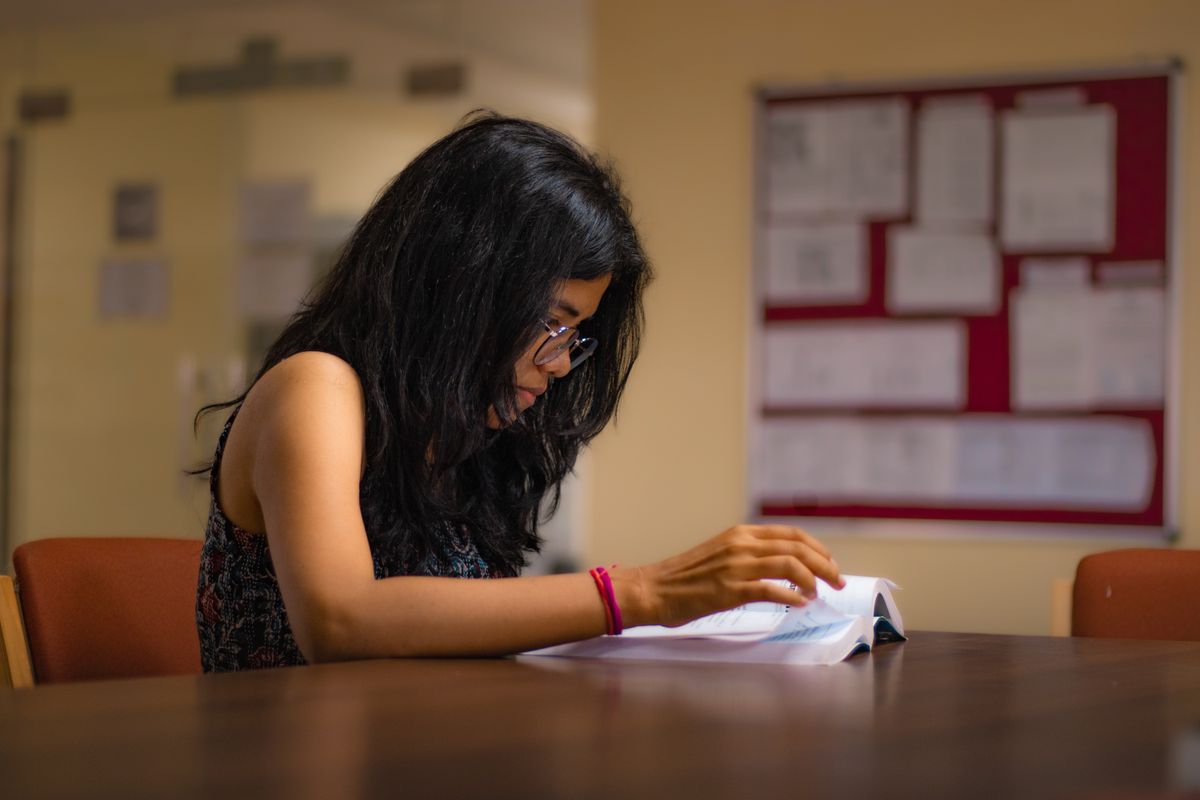
Depending on the subject and question, an effective answer may include a direct answer, the required explanation or steps, formula or working, a diagram where relevant, and a final conclusion.
Students should use the official sample papers and marking schemes for their own board and subject rather than assuming that one writing style works everywhere. CBSE publishes Class XII Sample Question Papers and corresponding Marking Schemes across subjects including Physics, Chemistry, Biology and Mathematics for the 2026–27 academic session.
Compare written answers with the marking scheme
The goal is not to make every answer unnecessarily long. The goal is to include the information needed for the marks available.
Use YouTube Actively and Make Revision Part of the Plan
YouTube can be extremely useful when a textbook explanation is difficult to understand, but random video consumption can easily become disguised procrastination. Use videos with a specific purpose: identify the concept, watch one focused explanation, close the video, recall the concept without looking, solve questions, and return to the textbook or syllabus to verify coverage.
Useful video categories include difficult concept explanations, short revision lessons, solved previous-year questions, derivation explanations and topic-wise problem-solving sessions. Avoid continuously switching teachers or playlists simply because another video looks easier. More content does not automatically mean more learning.
Use repeated retrieval instead of one-time learning
Learning a chapter once is not enough. Instead of repeatedly reading the complete chapter, combine initial learning, short recall, question practice, delayed revision, another retrieval session and mixed revision.
Flashcards can help with formulas, reactions, definitions and factual material, while problem-heavy subjects still require actual question solving.
Track Performance Instead of Only Tracking Study Hours
A student may study for several hours every day and still repeat the same weaknesses. That is why preparation should measure performance, not just time spent studying. A simple spreadsheet is sufficient.
After each major test, record the result and review it at the end of the week. The purpose is not to obsess over every score. It is to identify patterns. If Physics accuracy is improving but each question still takes too long, the next objective is speed. If Biology scores fluctuate because factual details are forgotten, revision frequency may need to increase.
Performance tracking converts preparation from guesswork into measurable improvement.
Protect Mental Energy and Avoid Burnout
Dual preparation becomes ineffective when the timetable is so demanding that it cannot be sustained. Breaks, sleep, exercise, food and distraction control are not separate from exam preparation. They affect the student’s ability to concentrate and continue studying consistently.

For teenagers aged 13–18, current sleep guidance recommends approximately 8–10 hours of sleep per 24 hours. Adequate sleep supports attention, concentration and readiness to learn.
A sustainable timetable usually performs better than an extreme timetable that lasts only a few days.
Practical Daily Timetable Examples
These are examples, not mandatory schedules. School timings, coaching schedules, travel, sleep and individual weak areas will change the available study hours.
Example: NEET + Board Preparation
| Time | Study Block |
|---|---|
| 6:00–8:00 AM | Biology / NCERT-focused study |
| 10:00 AM–12:00 PM | Chemistry theory + MCQ practice |
| 2:00–4:00 PM | Timed Biology MCQs |
| 5:00–6:00 PM | Short Biology or mixed-topic test |
| 8:00–9:00 PM | Daily revision and mistake review |
The official NEET UG syllabus contains Physics, Chemistry and Biology content. Adapt the example timetable to maintain balanced coverage rather than allowing Biology alone to consume the entire competitive-preparation schedule.
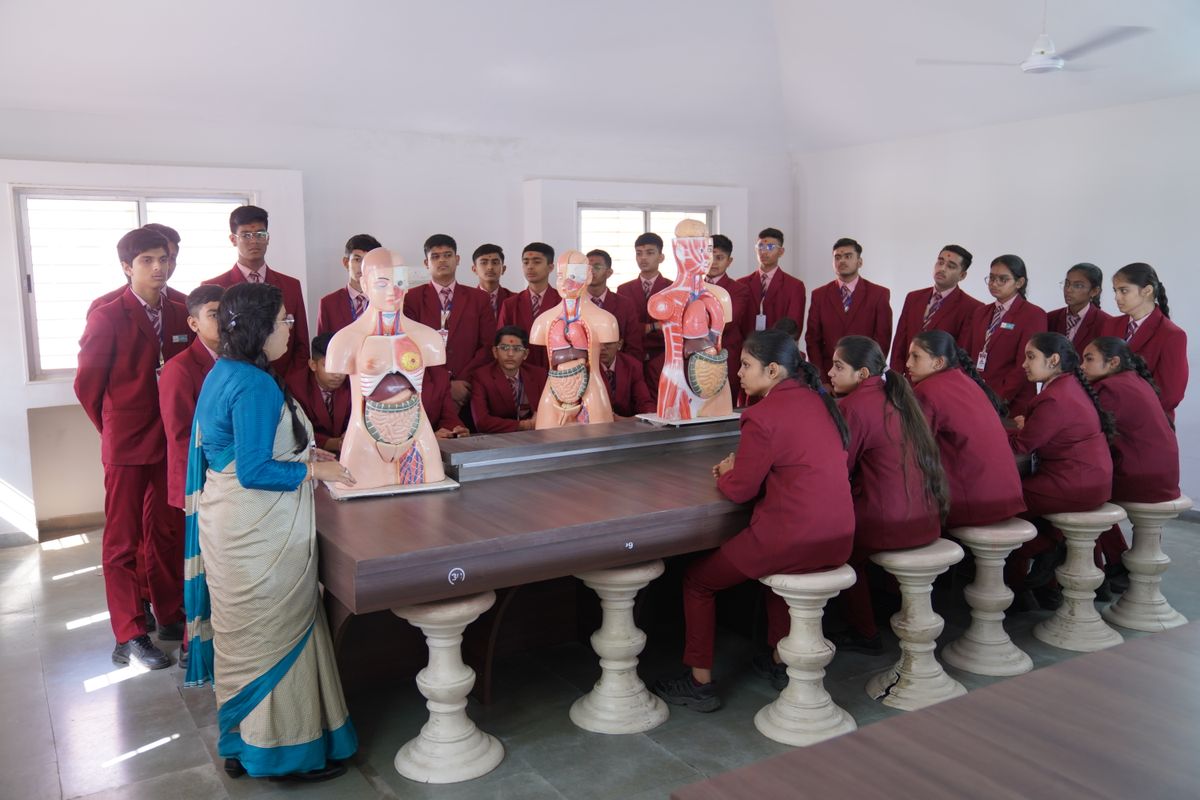
Example: JEE + Board Preparation
| Time | Study Block |
|---|---|
| 6:00–7:00 AM | Formula and short-note revision |
| 10:00 AM–12:00 PM | Mathematics problem-solving |
| 2:00–3:00 PM | Physics / Mathematics derivations or board writing |
| 5:00–7:00 PM | Timed mixed-question or MCQ practice |
| 9:00–10:00 PM | Error log and mistake-correction session |
How to Combine Board and Competitive Preparation Efficiently
A practical chapter-level workflow is to learn once, practise in both formats, record mistakes, revise after a delay and test again.
Learn the common concept thoroughly
Use the prescribed textbook, class notes and reliable explanations.
Complete board-oriented practice
Practise explanations, derivations, numerical working and diagrams where required.
Complete competitive-oriented practice
Solve MCQs, numerical questions and previous-year questions under gradually increasing time pressure.
Record mistakes
Separate conceptual mistakes from calculation, interpretation and time-management errors.
Revise the same chapter later
Use retrieval rather than only rereading.
Test the chapter again in a mixed paper
A concept is not fully secure simply because chapter-wise questions were solved correctly once.
Final Strategy
Preparing simultaneously for board examinations and competitive exams becomes easier when students stop treating them as two completely separate syllabi. The most efficient system is to identify overlapping concepts, build one strong conceptual foundation, and then train separately for the two examination formats.
For boards, practise structured written answers and official sample-paper formats. For JEE or NEET, develop objective problem-solving, accuracy and time management. Combine both with spaced revision, previous-year questions, mistake analysis, performance tracking and a sustainable daily routine.
The result is not more studying for the sake of studying. It is better coordination of the work students are already doing.
Official Sources and Research References
Use current official syllabi, textbooks and sample papers as the final reference for what is prescribed in each examination.
- NCERT official eBooks and textbook access
- CBSE Curriculum 2026–27
- CBSE Class XII Sample Question Papers & Marking Schemes 2026–27
- JEE Main 2026 official Information Bulletin
- NEET UG 2026 official syllabus
- Educational Psychology Review — spacing and interleaving systematic review
- Review of retrieval practice and learning
- CDC — sleep and health guidance for students
Frequently Asked Questions
Can I prepare for board exams and JEE at the same time?
Yes. Many Physics, Chemistry and Mathematics concepts overlap, so students can build the conceptual foundation once and then practise board-style written questions and JEE-style objective problems separately. Official syllabi should be compared because the coverage and depth are not identical.
Can I prepare for NEET and board exams together?
Yes. Physics, Chemistry and Biology contain considerable shared foundational content, but preparation should include separate practice for descriptive board questions and NEET objective questions. Always follow the current official NEET syllabus.
Is NCERT enough for board and competitive exam preparation?
NCERT can be an important foundation, particularly where it is prescribed or closely aligned with the syllabus, but students should not automatically treat one resource as sufficient for every exam. Check the official syllabus, sample papers, previous-year questions and the requirements of the specific examination.
Should I study boards and competitive exams on different days?
Not necessarily. A weekly rotation can help, but many students benefit from learning one concept and practising both formats during the same week. The important factor is ensuring that neither descriptive writing nor objective problem-solving is neglected.
How often should I revise for competitive and board exams?
Use repeated revision instead of waiting until the syllabus is complete. Revisiting information after a delay and actively retrieving it through questions is supported by research on spaced and retrieval practice.
Should I solve MCQs every day?
Regular objective practice is useful for JEE and NEET preparation, but there is no universal daily number that guarantees improvement. The right volume depends on syllabus stage, difficulty, accuracy and the amount of time spent analysing mistakes.
How can I know whether my preparation is improving?
Track accuracy, question-solving time, repeated mistakes, weak chapters, negative marks, test scores and board-answer completion time. Review trends across several tests instead of judging preparation from a single score.