Career guide · Artificial intelligence
Computer Vision Engineer
A Computer Vision Engineer builds AI systems that help machines interpret images and video. This guide explains the role, skills, education pathway, projects, tools, salary evidence and India-focused job outlook for students exploring computer vision as a career.

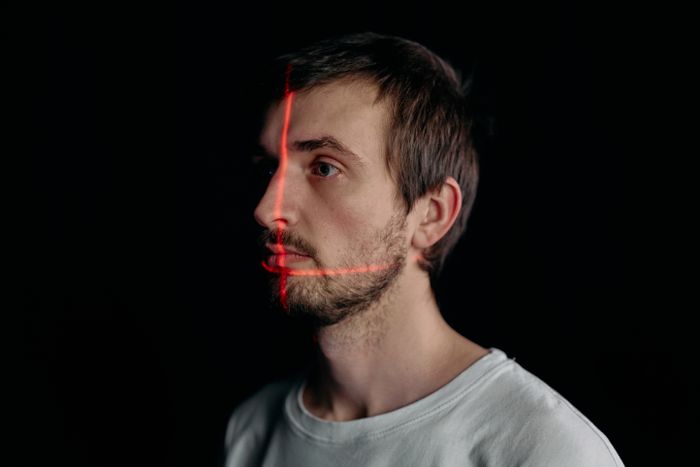
Computer vision connects programming, mathematics and machine learning with practical visual problems.
What is a Computer Vision Engineer?
Quick answer: A Computer Vision Engineer designs and develops software, algorithms and machine-learning models that help computers process, analyse and interpret visual data.
The role combines programming, mathematics, image processing, deep learning and practical problem-solving across fields such as healthcare, manufacturing, robotics, logistics, retail, agriculture and autonomous systems.
| Search question | Clear answer |
|---|---|
| Best starting route | Build a strong base in mathematics, programming, computer science or a related engineering field, then create computer vision projects. |
| Main tools | Python, OpenCV, TensorFlow/Keras, PyTorch/torchvision and, for performance-heavy systems, C++. |
| Portfolio proof | Image processing, classification, object detection, segmentation, real-time video and a deployed project. |
What does a Computer Vision Engineer do?
A Computer Vision Engineer is a computer science professional who builds systems that can extract useful information from visual data such as photographs, video streams, scans and camera feeds.
Depending on the project, the system may classify an image, detect an object, recognise a face, track movement, segment regions, read text, estimate depth or support automated decision-making.
Typical applications include
Why is computer vision important?
Computer vision is important because many real-world decisions depend on visual information. Automating or assisting the interpretation of that information can make inspection faster, improve consistency, support safety and enable entirely new products and services.
| Industry | How computer vision is used |
|---|---|
| Healthcare | Analysing medical images such as X-rays or scans, assisting detection tasks and supporting diagnostic workflows. |
| Manufacturing | AI-powered quality inspection, defect detection, counting, measurement and process monitoring. |
| Logistics | Tracking goods, reading labels or barcodes, monitoring packages and automating visual checks. |
| Retail | Shelf monitoring, checkout automation, inventory visibility and customer-flow analysis where privacy rules allow. |
| Agriculture | Crop monitoring, disease or stress detection, visual grading and yield-related analysis. |
What work does the role involve?
The exact work depends on the industry, but a computer vision engineer often moves between data, modelling, software development, testing and deployment.
-
1
Design image-analysis algorithms
Develop methods that classify, detect, segment, track or recognise patterns in images and video.
-
2
Prepare visual datasets
Collect, clean, organise and prepare image or video datasets so models can learn from reliable inputs.
-
3
Build and train models
Use deep-learning models for classification, detection, segmentation, tracking, recognition or OCR workflows.
-
4
Evaluate and deploy systems
Measure accuracy, speed, robustness and failure cases before deployment on cloud, mobile, edge or real-time environments.
A strong candidate can explain the visual problem, the dataset, the model choice, the evaluation results and the system limits.
Responsible AI note: Computer vision systems should be built with privacy, consent, data protection, bias testing, false-detection review and careful deployment in mind, especially when people are identified or monitored.
Which skills are needed?
To succeed in this career, you need technical depth and the ability to solve practical problems. You do not need to master every tool before you begin, but the following foundations are especially important.
| Skill area | What to learn |
|---|---|
| Programming | Python is the most common starting point; C++ is valuable for performance-heavy, robotics and real-time systems. Java may appear in some software environments. |
| Deep learning | Neural networks, convolutional neural networks, transfer learning, model training, validation and modern vision architectures. |
| Mathematics | Linear algebra, probability, statistics, vectors, matrices, optimisation and algorithmic thinking. |
| Computer vision | Image representation, filtering, transformations, feature extraction, detection, segmentation, tracking and video processing. |
| Frameworks and libraries | OpenCV, TensorFlow/Keras, PyTorch and torchvision, plus the supporting Python data ecosystem. |
| Engineering practice | Version control, debugging, APIs, data pipelines, testing, deployment and performance measurement. |
Soft skills that matter
How do you become a Computer Vision Engineer?
There is no single compulsory degree titled “Computer Vision Engineering.” Most professionals enter through computer science, artificial intelligence, data science, computer engineering, electronics, robotics or a related technical field.
Build the school foundation
A science background is a common route. Mathematics is especially useful, while Computer Science can give you an early programming foundation. For BTech/BE admission, subject requirements vary by institution, so students should check the eligibility rules of the colleges they are considering.
Choose a relevant technical field
Common options include Computer Science, Artificial Intelligence, Data Science, Computer Engineering, Electronics, Robotics or related fields. Use the degree years to build strong programming, mathematics, machine-learning and project skills.
Build visible proof
Start with image classification and image processing, then progress to object detection, segmentation, OCR, tracking or video analytics. A master’s in Machine Learning, Robotics, Computer Vision, Computer Science or a related field can be useful for research-intensive roles, but it is not universally required for every industry engineering position.
Certificate caution: Online courses and certifications from initiatives such as NPTEL/SWAYAM and IndiaAI FutureSkills can support structured learning, but certificates should complement projects, fundamentals and practical experience.
Which projects and tools should students practise?
Computer vision engineering usually involves a mix of image-processing libraries, deep-learning frameworks, programming languages and deployment tools. The exact stack depends on the project.

| Stage | Example project |
|---|---|
| 1. Image basics | Read, resize, crop, filter and transform images using OpenCV. |
| 2. Classification | Train a model to classify two or more image categories. |
| 3. Object detection | Detect and label multiple objects inside an image or video. |
| 4. Segmentation | Identify the exact pixels belonging to an object or region. |
| 5. Real-time vision | Run a model on webcam/video and measure latency and accuracy. |
| 6. Deployment | Expose a model through an API or deploy it to a small app, cloud service or edge device. |
Tools commonly used in computer vision
-
1
OpenCV
An open-source computer vision library with extensive image-processing and vision algorithms.
-
2
TensorFlow and Keras
Widely used tools for building and training machine-learning and computer vision models.
-
3
PyTorch and torchvision
Commonly used for deep-learning workflows, vision datasets, transforms, model architectures, detection and segmentation.
-
4
Python and C++
Python dominates experimentation and model development; C++ matters in performance-sensitive, robotics, embedded and real-time systems.
Where can Computer Vision Engineers work?
Computer vision skills can be applied wherever images or video are important to a product or process.
Common job titles related to computer vision
| Job title | Typical focus |
|---|---|
| Computer Vision Engineer | Image/video algorithms, model training, testing and deployment. |
| Machine Learning Engineer – Computer Vision | ML model development for visual tasks. |
| Vision AI Engineer | AI systems that process camera, image or video data. |
| Image Processing Engineer | Image enhancement, transformation, analysis and pipeline development. |
| Perception Engineer | Robotics, autonomous systems and environment understanding. |
| Research Engineer – Computer Vision | Advanced model experimentation and applied research. |
What is the salary and job outlook in India?
Salary varies widely by country, city, industry, experience, academic background and whether the role is focused on research, product engineering, robotics or deployment. Because “Computer Vision Engineer” is not tracked as a single official occupation in many labour databases, salary figures should be read as market indicators rather than guaranteed pay.
Computer Vision Engineer salary in India: AmbitionBox’s India salary page, updated 9 July 2025, reported annual salaries of approximately ₹3.2 lakh to ₹22 lakh for Computer Vision Engineers with less than one to five years of experience, based on 802 salary submissions. These figures are market-reported estimates rather than an official pay scale, and actual compensation can vary substantially by company, city, experience and specialisation.
Career outlook: India does not publish a dedicated national job-growth projection specifically for “Computer Vision Engineer.” For an India-focused view, the broader AI ecosystem is expanding through the IndiaAI Mission. In July 2026, the Press Information Bureau reported that 58 AI Centres of Excellence and 543 Data & AI Labs had been approved, while the IndiaAI FutureSkills pillar is designed to build the AI talent pipeline through specialised labs, student fellowships and industry-aligned curricula. This indicates continuing public investment in AI skills and deployment in India, but it should not be treated as a guaranteed job-growth rate for computer vision roles.
Is computer vision a strong career direction?
Computer vision sits at the intersection of artificial intelligence, software engineering, mathematics, robotics and real-world visual data. That combination creates opportunities across multiple industries, but the field is technically demanding.
Students who enjoy coding, mathematics, experimentation and building systems that interact with the physical world may find it a particularly relevant direction to explore.
Sources and freshness notes
The article preserves the source document’s India-focused evidence trail and avoids mixing Indian salary context with unrelated overseas labour-market projections.
- Office of the Principal Scientific Adviser to the Government of India – IndiaAI Mission
- Press Information Bureau – IndiaAI Mission Advances AI-Driven Governance and Public Service Delivery, 29 July 2026
- IndiaAI FutureSkills Fellowship – IndiaAI Mission
- NPTEL, IIT Guwahati – Computer Vision and Image Processing
- NPTEL, IIT Hyderabad – Deep Learning for Computer Vision
- AmbitionBox – Computer Vision Engineer Salary in India
About the author and this guide: Lakshmi · Mass Graduates. This career guide focuses on study choices, computer vision skills, practical project evidence and India-focused AI career context. Content last reviewed in October 2026.
Frequently asked questions
Clear answers to common questions students ask about computer vision engineering, AI careers, mathematics, portfolio projects and job preparation.
Is a Computer Vision Engineer the same as an AI Engineer?
Not exactly. Computer vision is a specialised area within AI. An AI Engineer may work on language, recommendations, forecasting, agents, or other AI systems, while a Computer Vision Engineer focuses mainly on images, video, spatial perception, and visual understanding.
Do I need strong mathematics for computer vision?
Yes, mathematics is important. Linear algebra, probability, statistics, geometry, and optimisation help you understand how image transformations and machine-learning models work. You can begin coding before mastering all of them, but stronger mathematics becomes more valuable as problems become advanced.
Can I become a Computer Vision Engineer after Class 12?
Class 12 is the starting point rather than the final qualification. A common route is a relevant bachelor’s degree followed by projects, internships, machine-learning study, and specialised computer vision practice.
Is Python enough for computer vision?
Python is the best starting language for most learners because the computer vision and deep-learning ecosystem is strong. C++ becomes useful for robotics, embedded systems, high-performance inference, and real-time applications.
Do I need a master’s degree?
Not for every job. Many industry roles can be reached with a relevant bachelor’s degree and strong practical skills. Research-heavy positions may prefer postgraduate study. IndiaAI FutureSkills supports AI-related work at undergraduate, postgraduate and PhD levels, while NPTEL courses from Indian institutes provide specialised learning in computer vision and deep learning. Employer requirements still vary by role.
What should I put in a computer vision portfolio?
Include a small number of well-documented projects that show progression: image processing, classification, object detection or segmentation, real-time video, and at least one deployed application. Explain the dataset, model choice, evaluation metrics, limitations, and what you improved.
What is the difference between image processing and computer vision?
Image processing focuses on transforming or enhancing images, while computer vision aims to extract meaning or make decisions from visual data. In practice, computer vision engineers often use image-processing techniques as part of a larger vision pipeline.
Will generative AI replace computer vision engineers?
Computer vision work is changing as multimodal and generative models become more capable, but real-world vision systems still require data preparation, evaluation, integration, optimisation, safety checks, deployment, and domain knowledge. The role is evolving rather than reducing to a single model or tool.