STUDY SKILLS · PLUS ONE / CLASS 11 · 2027 GUIDE
How to Balance School, Tuition, Self-Study, and Screen Time Effectively
An India-focused daily and weekly routine for Class 11 students: organise school, make coaching useful, protect self-study, control distracting screens and sleep enough.

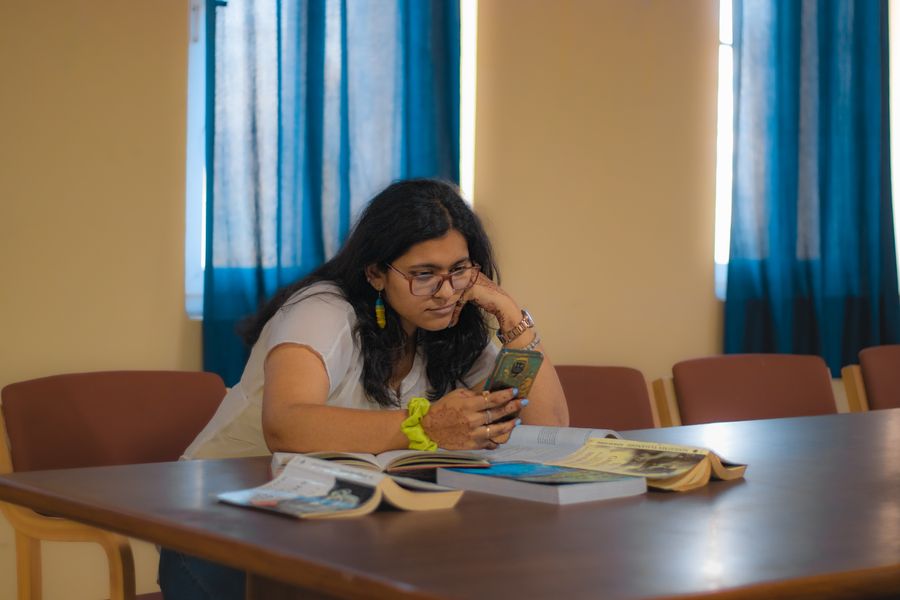
Indian students sharing study materials on campus — a real, topic-matched photograph.
How can Plus One students balance school, tuition, self-study and screen time?
Quick answer: Keep school as your main learning block, use tuition to clear specific doubts, protect one or two focused self-study sessions, and set a separate limit for recreational screen use. Schedule meals, travel, movement and 8–10 hours of sleep for most teenagers aged 13–18. Review the plan each week rather than forcing the same timetable every day.
You do not have to study every waking minute. For a Plus One student in India, balancing learning and life starts with knowing which tasks deserve attention, not with collecting the maximum number of study hours.
| Responsibility | What it should accomplish | First practical rule |
|---|---|---|
| School | Learn lessons, participate and record doubts | Pay attention instead of planning to relearn everything later |
| Tuition or coaching | Clear weak concepts and get targeted feedback | Arrive with two or three specific questions |
| Self-study | Build recall, problem-solving and exam readiness | Work in distraction-free blocks with a clear task |
| Screen time | Use helpful technology without crowding out sleep or study | Separate educational use from scrolling and gaming |
Important: Tuition is optional and should add genuine learning value. A student who studies well without coaching does not need to add tuition simply to match classmates.
1. Decide what deserves your time first
Write down your fixed commitments (school, travel, meals and any tuition), then your flexible commitments (revision, homework, play and entertainment). Use the Eisenhower Matrix as a quick decision filter—not as another complicated app to manage.
| Priority type | Class 11 example | What to do |
|---|---|---|
| Important and urgent | Tomorrow’s practical record or a test topic you have not revised | Start today with the smallest useful step |
| Important but not urgent | Regular NCERT reading and formula practice | Schedule a repeatable study block |
| Urgent but less important | Non-essential group-chat messages | Mute, postpone or batch |
| Neither urgent nor important | Unplanned scrolling between homework tasks | Move it to a defined leisure window |
On overloaded days, pick just three outcomes: one school obligation, one revision priority and one wellbeing commitment. That is more practical than a list of fifteen incomplete tasks.
2. Follow a realistic school-day timetable
The source article proposes a day beginning at 6:00 AM with school from 8:00 AM to 2:00 PM and tuition from 3:00 PM to 5:00 PM. The example below retains that structure but makes time for travel, shorter focused revision and an 8½-hour sleep opportunity. Adjust it to match your real timings.
| Time | Activity | Purpose |
|---|---|---|
| 6:00–6:30 AM | Wake up, get ready | Avoid starting the day with social media |
| 6:30–7:10 AM | Short review / problem practice | One difficult concept or previous-day recall |
| 7:10–8:00 AM | Breakfast and travel preparation | Adapt for actual school commute |
| 8:00 AM–2:00 PM | School (illustrative) | Focus in class, mark specific doubts |
| 2:00–3:00 PM | Travel, lunch, rest | Move the next block later if travel takes longer |
| 3:00–5:00 PM | Tuition / coaching, if scheduled | Target weak chapters and solve doubts |
| 5:00–5:45 PM | Return, snack, movement | Rest or get some fresh air |
| 5:45–6:30 PM | Self-study block A | Practise the day’s hardest task |
| 6:30–7:15 PM | Flexible time / family | Activity, hobbies or lighter schoolwork |
| 7:15–8:00 PM | Dinner | Take a proper break |
| 8:00–8:40 PM | Self-study block B or short revision | Recall, notes and next-day readiness |
| 8:40–9:30 PM | Wind down / prepare for bed | Keep stimulating screens away |
| 9:30 PM–6:00 AM | Sleep window | 8½ hours in bed; individual needs vary |
Do not copy these clock times blindly. If tuition ends late or your commute is long, remove an optional activity or reduce one study block—do not routinely take the time from sleep.

3. Make self-study shorter, active and effective
Self-study works best when it produces evidence of understanding. Select a single chapter, subtopic or question type before you start. The 25-minute focus + 5-minute break pattern (often called Pomodoro) is one option; longer 40–50-minute blocks may work better for problem sets.
- 1Active recall
Close the notes and reproduce a definition, formula, diagram or explanation from memory.
- 2Practice questions
Apply an idea in new problems and check mistakes—not just correct answers.
- 3Spaced review
Revisit important ideas after a day, several days and later in the month.
- 4Mind maps and diagrams
Link concepts visually when that genuinely makes a topic easier to explain.
- 5Teach-back or Feynman-style explanation
Explain an idea in plain language and identify gaps in your understanding.
Use our guide to studying smart instead of hard for additional practice methods. You should not spend twenty minutes choosing stationery for a thirty-minute revision block.

4. Make tuition count—without duplicating every lesson
Tuition can help when a teacher explains a difficult chapter or gives feedback you cannot get through self-study alone. However, attending the same explanation twice is not automatically effective. Measure the value by what you can solve afterwards.
Practical example: A Plus One Physics student struggles with projectile motion. Instead of asking for “the whole chapter again”, they bring one vector-resolution problem, request the missing step and solve a second problem at home. That is a better use of tuition than simply copying notes.

5. Control distracting screen time without banning useful technology
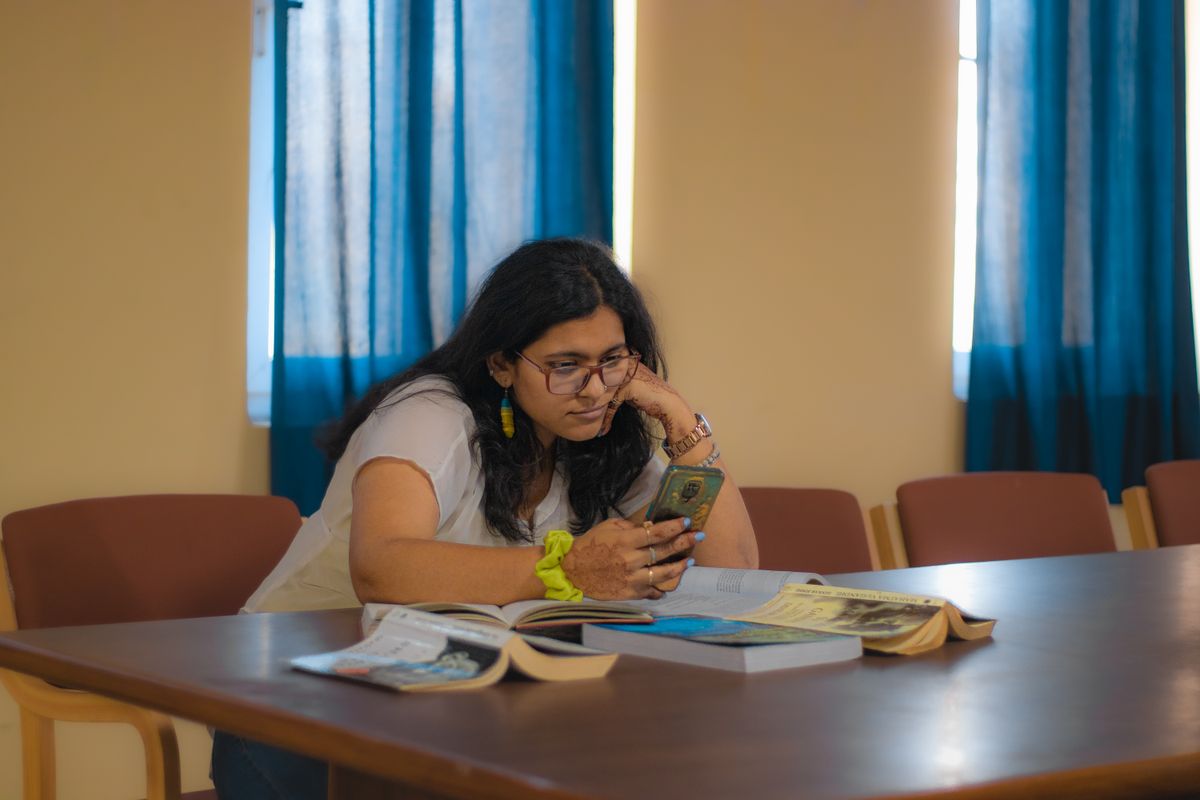
Separate screen use into learning (a lecture, textbook PDF or homework submission), necessary communication (class announcements), and recreation (short videos, gaming or social media). Each needs different boundaries.
| Screen activity | Use it purposefully | Boundary to try |
|---|---|---|
| Educational videos or study apps | Choose the exact concept before opening the app | Finish with a written summary or solved question |
| Class WhatsApp or messages | Check announcements at planned times | Mute nonessential notifications during study |
| Social media and short videos | Enjoy a deliberate leisure break | Use a timer or app limit that suits your family |
| Gaming or entertainment | Include it after essentials are protected | Avoid allowing it to push bedtime later |
| Phone at night | Prepare for the following school day | Keep the phone away from bed if possible |
The American Academy of Pediatrics encourages personalised family media plans and screen-free spaces instead of treating one universal daily number as appropriate for every child. An optional entertainment limit such as one hour may help some students, but it is not an official rule for all Class 11 students. The key question is whether use is displacing sleep, study, exercise or real-life connections.
See the student digital-minimalism guide for ways to reduce digital distractions.
6. Plan the week, not just tomorrow
Weekly planning makes clashes visible early: a chemistry test on Monday, Maths tuition on Tuesday, assignments due Thursday and a family function on Saturday. Decide where each task fits before the busy days arrive.
| When | Weekly action | Time commitment |
|---|---|---|
| Sunday | List tests, submissions, school activities and coaching | 10–15 minutes |
| Monday–Friday | Protect short daily review blocks | Time varies with school load |
| After each lesson | Mark one unresolved question | 2 minutes |
| Saturday | Review backlog and complete one practice test if useful | A manageable focused block |
| Sunday evening | Check progress and adjust next week | 10 minutes |
Use a notebook, wall calendar or the digital planner and habit-tracking guide. A simple planner you review is better than a detailed app you forget to open.
7. Protect sleep, movement, food and breaks
Studying sustainably means protecting your health. The CDC states that adolescents aged 13–18 generally need 8–10 hours of sleep per 24 hours. The WHO advises children and adolescents aged 5–17 to average 60 minutes of moderate-to-vigorous physical activity per day across the week. These are broad health guidelines, not instructions to follow an unsafe exercise schedule.
A 20-minute walk is a worthwhile starting point, but it should not be described as automatically meeting the broader activity recommendation. Similarly, sleeping just 6–7 hours to create more revision time is not a sensible default for teenagers.
For coping strategies, see reducing exam stress and anxiety.
8. Connect school lessons to the same day’s revision
School and self-study should reinforce each other, not compete. Choose one lesson worth reviewing, identify what the teacher emphasised and practise retrieving or applying it in the evening.
- 1During class
Write down examples, questions and points you did not fully understand.
- 2After class
Spend 10–15 minutes clarifying the main idea from memory.
- 3Later in the week
Solve a few related questions or compare a diagram with your textbook.
- 4Before the test
Use an error log and a short subject summary instead of rewriting entire chapters.
For board-focused practice, the science-backed revision strategies guide offers more ideas.
9. Stop task-switching while you study
Repeatedly switching from Maths problems to a messaging app and back can break concentration. Use one clearly defined task per block, with notifications muted and the phone out of reach unless it is needed for the question.
| Instead of… | Try… |
|---|---|
| Watching a lesson while checking reels | Watch one lesson, then write three takeaways |
| Doing two subjects at the same time | Finish one small chapter task before switching |
| Replying to every chat instantly | Check messages at planned intervals |
| Feeling guilty during breaks | Take a planned break, then return to your next task |
Quick focus rule: Write one task at the top of the page. If another idea comes up, park it on a small “later” list instead of interrupting your work.
10. Know when to reduce tuition or self-study load
The aim is to learn more effectively, not to fill every spare hour. If coaching, school homework and travel leave no realistic time to revise, the schedule is overcrowded.
| If this is happening… | Better adjustment |
|---|---|
| Tuition repeats content you already understand | Discuss reducing sessions or switching to doubt-based help |
| School projects collide with coaching | Move a nonessential study block and prioritise the real deadline |
| You are regularly losing sleep | Protect bedtime and remove a lower-priority activity |
| Every evening becomes unproductive | Try a shorter high-quality block before adding hours |
| You feel persistently overwhelmed | Speak to a parent, teacher or school counsellor about the load |
For students without tuition, replace the coaching block with targeted question practice, teacher doubts, peer collaboration or rest. No one needs to invent a tuition slot simply because a sample timetable has one.
11. Use weekends for catch-up and genuine downtime
Weekends should not turn into two full days of unfinished homework. Try a balanced mix: one higher-priority chapter, a small backlog task, a brief self-test when useful, and ample time for sleep, movement, family and hobbies.
Choose group study only if everyone has a concrete objective. For practical approaches, see our group-study and collaboration guide.
12. Adjust the routine during tests and exam weeks
A normal school week and an exam week should not have identical plans. When a test is near, prioritise active recall, marked questions and sleep. Delay optional hobby projects rather than sacrificing every break.
| Normal week | Exam week |
|---|---|
| Build understanding across subjects | Focus on the highest-priority assessed topics |
| Review weak chapters gradually | Use error logs and previously missed problems |
| Flexible entertainment after school | Smaller entertainment windows where helpful |
| Long-term enrichment topics | Pause lower-priority extras temporarily |
| Stable bedtime | Keep bedtime protected and avoid all-night revision |
Study schedules should still leave room to eat, move, travel and sleep. If your exams have officially published rules, use your school’s latest notices instead of assuming a 2027 board timetable.
13. Try this simple seven-day balance reset
If your routine currently feels chaotic, introduce just one adjustment per day. This keeps the plan realistic while you test what genuinely helps.
| Day | Action | How to know it worked |
|---|---|---|
| Monday | Track one school day without judging yourself | You know where the time went |
| Tuesday | Write your top three priorities | You finish at least one important task |
| Wednesday | Keep the phone away for one study block | You produce a solved problem or clear notes |
| Thursday | Bring two written doubts to tuition or school | At least one doubt is resolved |
| Friday | Review school notes on the same day | You can explain the main concept in your own words |
| Saturday | Do a short practice test and correct errors | You know one weakness to address |
| Sunday | Plan sleep, tuition, study and recreation for next week | Your calendar is realistic and flexible |
Repeat only the changes that improve understanding or reduce friction. You do not need to chase a perfect seven-day streak.
14. Common time-management mistakes—and the fixes
| Common mistake | Better approach |
|---|---|
| Copying a topper’s timetable exactly | Start with your actual school, tuition and travel hours |
| Adding four hours of study every evening | Choose focused blocks you can repeat |
| Studying only by rereading | Use recall, questions and checked errors |
| Watching “study with me” videos instead of studying | Use videos only when they help a named learning task |
| Paying for extra tuition without a clear need | Reassess the gaps you want coaching to solve |
| Setting a strict screen number then ignoring it | Use a realistic family media plan and adjust |
| Sacrificing sleep before every test | Revise earlier, protect sleep and ask for help if needed |
Remember that family responsibilities, disability access needs, health, exam accommodations and long commutes can make one student’s schedule unlike another’s. Flexible planning is a strength.
Reliable references for building a healthy student routine in 2027
This is evergreen study-skills guidance updated in October 2026 for readers planning their 2027 academic year. It does not rely on any unannounced 2027 exam or school timetable.
- US CDC: Sleep and Health for students — teenage sleep guidance.
- World Health Organization: Physical Activity — age-based movement recommendations.
- American Academy of Pediatrics: Family Media Plan — practical media boundaries.
- NCERT online textbooks — locate official textbooks for relevant Indian school subjects.
- DIKSHA platform — India-focused digital learning resources.
For 2027 exams: Confirm dates, syllabi, prescribed materials and assessment rules with your school or examination board. They are not established by this example routine.
FAQs: school, tuition, self-study and screen time
Short answers to common planning questions from Indian Plus One and Class 11 students.
How many hours should a Class 11 student self-study after school?
There is no universal required number. Start with a focused 30–60-minute block and add another only when schoolwork, travel, tuition, sleep and wellbeing allow. The quality of practice matters more than a fixed claim about hours.
Can I balance school and tuition every day?
Yes, sometimes, but only if tuition adds value and leaves room for independent practice, travel, meals and sleep. Students with long commutes may need fewer tuition days.
What is the best timetable for Plus One students in 2027?
A good timetable fits your actual school hours, exam calendar, travel and energy. The example in this guide is a starting point, not an official timetable or guaranteed plan.
How much screen time is acceptable for Class 11 students?
There is no single entertainment-screen limit that is right for every teenager. Separate study-related use from recreation, protect sleep and activity, and use family-agreed boundaries.
Should I stop using my phone while studying?
Turn off unrelated notifications and keep the phone away for paper-based tasks. Use it intentionally when it is required for an educational video, textbook or doubt.
Is tuition compulsory for high marks in Plus One?
No. Tuition can help some students with particular difficulties, but classroom learning, practice, feedback and consistent self-study can also support progress without tuition.
Is the Pomodoro technique useful for all subjects?
It may help you start and stay focused, but it is optional. A longer uninterrupted block might be more suitable for lengthy calculations or essay writing.
How much sleep do teenagers need for school?
For ages 13–18, the CDC cites a recommended 8–10 hours of sleep per 24 hours. Individual circumstances vary; seek professional advice for persistent sleep difficulties.
How should I balance boards and entrance exam preparation?
Start with the overlapping concepts and exam-specific practice needs, keep an error log, and adjust the weekly plan around verified examination dates and school assessments.
What if I cannot follow my study timetable?
Check which part was unrealistic: travel, tuition, chores, breaks or phone distractions. Keep the essential commitments, reduce overloaded blocks and retry with a simpler plan.
Should I use educational apps and AI tools in 2027?
Use them when they help you understand, practise or organise lessons. Verify explanations against reliable materials, protect personal data and follow your school’s academic-integrity rules.
Can weekend group study replace self-study?
Group study can help with discussion and doubt-solving, but individual practice is still useful for testing what you personally know. Give group sessions a clear topic and end time.
A balanced routine is one you can actually repeat
Start with a priority list, a realistic daily schedule and two manageable self-study targets. Let school carry the first part of learning, use tuition only for meaningful gaps, keep recreational screens from interrupting homework, and protect sleep and downtime.
For the 2027 academic year, the strongest timetable is not the strictest one. It is the one that helps you learn consistently while staying healthy and making room for the people and activities that matter.