
EXAM CONFIDENCE · MENTAL STRATEGIES · 2027 GUIDE
How to Build Exam Confidence as a Student – Practical Mental Strategies
Learn to manage exam nerves through realistic mock practice, mistake recovery, calm self-talk and an achievable seven-day routine—without chasing perfect marks or a completely stress-free mind.

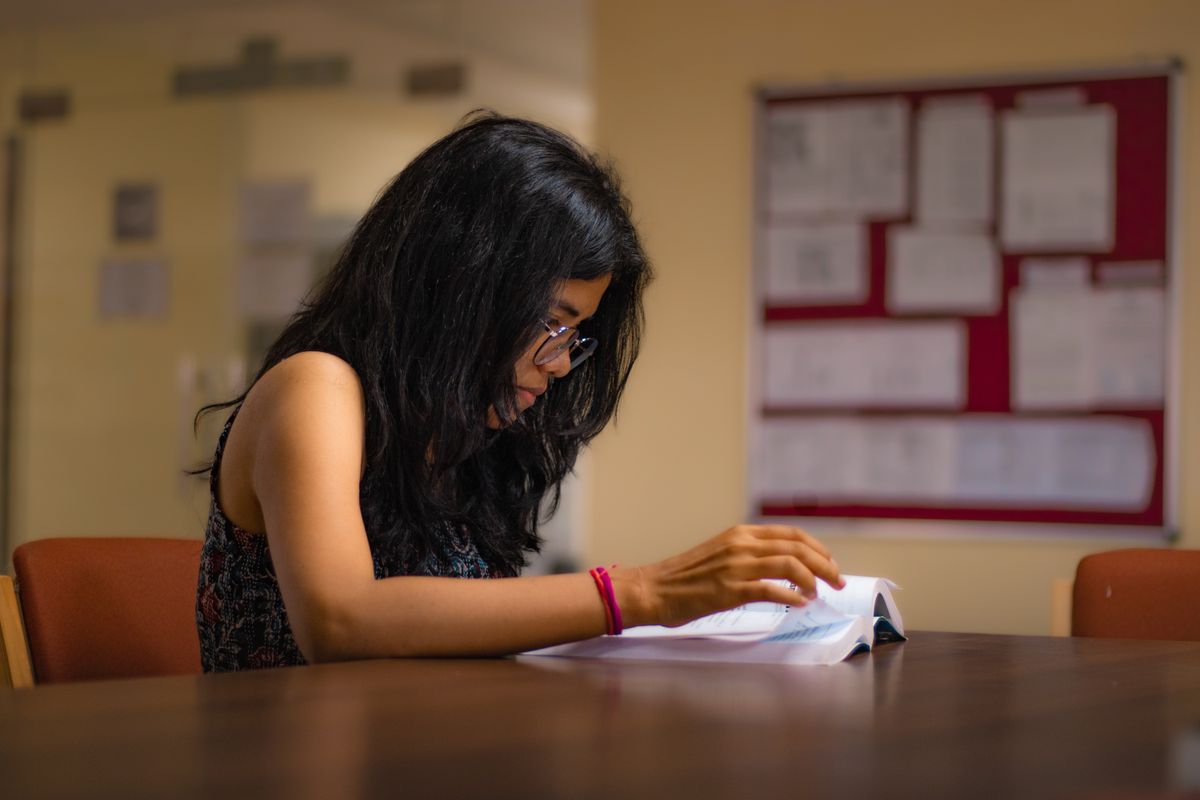
Indian students working together on homework in a bright, casual study space. Photo: Ketut Subiyanto / Pexels.
How can students build exam confidence?
Short answer: Exam confidence grows when students combine realistic preparation, practice under exam-like conditions, constructive self-talk and a clear plan for responding to difficult questions. You do not need to feel completely calm or guarantee a high mark to work effectively under pressure.
For an Indian Class 10 or 12 student preparing for 2027 board exams, a sensible starting point is one timed practice paper, one short list of recurring mistakes and one predictable pre-exam routine. Confidence is trust in actions you can repeat, not certainty about the result.
Remember: A little nervousness is common. The aim is not to eliminate every anxious thought; it is to know what to do next even when you feel nervous. Persistent or overwhelming anxiety deserves support from a trusted adult or qualified professional.
Why exam confidence drops before a test
Self-doubt often increases when a student is uncertain about the syllabus, worried about past marks or trying to revise everything in one night. The original article identifies five common pressures: last-minute dependence, comparisons, negative self-talk, fear of forgetting and treating one result as a measure of personal worth.
Instead of asking, “Will I definitely score 95%?”, ask “What do I know, what needs practice and what is my next useful action?” This shift is more practical than forced positive thinking.
Replace result pressure with process control
Mark targets can guide preparation, but they are not useful instructions when you are halfway through a paper. Process goals tell you exactly what to do.
| Unhelpful result thought | Process instruction |
|---|---|
| “I must not make any mistakes.” | “Read command words, show steps and check units.” |
| “Everyone else is faster.” | “Work at the pace required for this section.” |
| “One tough question means I will fail.” | “Mark it, continue with a solvable question and return if time allows.” |
| “I forgot everything.” | “Recall the topic outline and write the first fact or step I know.” |
A three-point instruction card—read carefully, attempt steadily, review intelligently—can be more useful than a long motivational speech on exam day.
Build a confidence evidence list
Use a page in your notebook to record concrete evidence of progress. This does not require perfect test scores; it records tasks completed and mistakes corrected. Review it when your mind exaggerates what you have not done.
| Evidence | Example entry | Next step |
|---|---|---|
| Syllabus progress | Completed two Biology chapters with recall questions | Revisit both after three days |
| Practice | Finished one 45-minute Maths practice set | Work on the two incorrect steps |
| Mistake corrected | Stopped mixing up conversion units in Physics | Test again next week |
| Recovery | Moved past a difficult question without losing the entire test | Repeat this behaviour in the next mock |
For a complementary approach to memory, see our guide to remembering what you study. Check whether you can retrieve the answers without looking, not just whether you recognise highlighted notes.
Use realistic mental rehearsal without magical thinking
Before a practice paper, imagine the first few minutes in concrete detail: reaching your seat, checking instructions, choosing a question and beginning an answer. Mental rehearsal is an additional coping exercise, not a replacement for subject knowledge or timed practice.
- 1Visualise a normal start
Picture reading instructions slowly, taking stock of the paper and setting a steady pace.
- 2Include an imperfect moment
Imagine getting stuck, taking one breath, marking the question and moving forward.
- 3Rehearse the response
Mentally repeat: “I can work on the next useful step.”
Keep it brief—around two or three minutes. If visualisation increases distress, skip it and use a straightforward written plan instead.
Build familiarity with timed papers and mock exams
Exam conditions become less surprising when you practise with a realistic timer, quiet desk, allowed stationery and the appropriate answer format. Begin with shorter timed sets if a full paper feels overwhelming, then work towards the official duration.
For CBSE students preparing for 2027, use the official Class 10 sample papers and marking schemes or Class 12 sample papers and marking schemes. These are for the 2026–27 session; do not assume every subject or state board follows one identical format.
After each mock: Separate errors into (a) concept gaps, (b) misread questions, (c) calculation or presentation mistakes and (d) poor time allocation. Improve one repeated error before taking another paper.
For a broader timetable and practice system, explore board and competitive exam preparation strategies.
Strengthen weak topics without chasing perfection
Avoiding a difficult chapter may feel comfortable today but can magnify worry before the test. Pick two or three specific weak areas and improve each to a usable level. Examples: balancing chemical equations, interpreting a demand curve or showing steps in differentiation.
If a chapter remains difficult, returning to foundational examples is a smart adjustment—not a reason to judge yourself.
Use a flexible three-pass exam-time strategy
Before the exam, read the subject instructions and estimate time using question marks and required answer length. You can adapt a three-pass approach if the paper permits flexible question order:
- 1First pass: secure accessible questions
Complete questions you understand well, without rushing or ignoring compulsory order rules.
- 2Second pass: return to moderate questions
Work through multi-step answers; show the reasoning needed by the marking scheme.
- 3Final pass: review and attempt remaining items
Check question numbers, calculations, labelled diagrams, units and missing subparts.
Do not use a universal 90/60/30-minute rule. Different subjects, exam durations, marks and compulsory sections need different pacing. Test your plan with actual sample papers.
A 60-second reset when panic rises
A brief grounding routine can help redirect attention when you feel overwhelmed. It does not need to make every anxious sensation disappear.
| Step | Do this quietly |
|---|---|
| Feet and posture | Rest both feet on the floor and relax your shoulders |
| Breathing | Try a gentle inhale for four counts and a longer exhale for six, if comfortable |
| Attention | Notice the pen in your hand or one visible point on the page |
| Action | Return to the question and write the first step you know |
Do not hold your breath or force a breathing rhythm that feels unpleasant. Guidance from the NHS on exam preparation and coping also emphasises revision planning, breaks and seeking support.
Make self-talk believable and actionable
Positive phrases are not magic. The most useful statements are grounded in something you can do. Replace absolute statements with coaching instructions you would give a friend.
Instead of comparing your speed to classmates, compare today’s evidence with last week’s practice. For connected techniques, see our guide to reducing exam stress and anxiety.
Protect sleep, food, movement and energy
Students sometimes cut sleep to extend revision, but poor sleep can undermine attention and learning. CDC guidance recommends 8–10 hours of sleep per 24 hours for ages 13–18. Adults need a different amount, and individual circumstances vary.
- Keep bedtime and wake-up time reasonably consistent.
- Eat regular meals, drink water and avoid experimenting with large amounts of caffeine before an exam.
- Use brief walking or stretching breaks while revising.
- Pack necessary stationery the day before to reduce early-morning decisions.
For more on sleep, nutrition and exam performance, read our practical sleep and nutrition guide.
Create a focused and supportive environment
Choose a quiet, reasonably well-lit place to practise, put your phone on silent and concentrate on one question type at a time. The right study block is one you can actually sustain—25 minutes or 50 minutes can both be useful depending on the task.
Support can be practical: ask a friend to quiz you, a teacher to explain a missed step, or a family member to protect one study block from interruptions. Keep peer groups small and task-based; a study session should end with a solved problem or clear notes.

If you want to coordinate practice with classmates, use the group-study and collaboration guide as a starting point.
A seven-day exam-confidence practice plan
This plan adds small actions to revision you already intend to complete. Adapt duration and order to your timetable and board syllabus.
| Day | Confidence-building activity | Evidence to record |
|---|---|---|
| 1 | Identify three worry triggers and two weak topics | Brief plan with next actions |
| 2 | Practise one short timed set | Time used and mistakes found |
| 3 | Fix one recurring concept gap | One new correct answer |
| 4 | Explain one chapter to a friend or to yourself | One explanation from memory |
| 5 | Rehearse the first two minutes of exam day | Three-step exam action card |
| 6 | Complete a longer mock or a realistic paper section | New mistake-log entry |
| 7 | Review progress and restore sleep, leisure and recovery time | Three pieces of confidence evidence |
A consistent schedule is more valuable than one exhausting day. For routine ideas, explore our guide to sustainable daily study routines.
What to do before and during the actual exam
| When | Practical action | Avoid |
|---|---|---|
| Night before | Check reporting instructions, ID/admit card if required, stationery and transport | Learning an entire new chapter overnight |
| Before entry | Eat, hydrate, arrive as instructed and use a short calming routine | Comparing “how much others studied” |
| Reading time | Follow invigilator instructions and examine questions or sections as permitted | Assuming all questions have equal time needs |
| While writing | Read command words, show reasoning and keep moving when stuck | Spending excessive time on one difficult item |
| Final check | Review labels, numbering, units and unanswered subparts | Changing a correct answer without a reason |
Always follow the exact instructions on your paper and from the examination authority. For advice on managing mixed board and entrance preparation, see board and entrance exam preparation without burnout.
Recover after a paper without spiralling into comparisons
After finishing an exam, take a short break before reflecting. Avoid a long social-media or group-chat post-mortem of every answer—especially when you still have another paper ahead.
- 1Notice what worked
Did you manage time, recover from a hard question or avoid distraction?
- 2Capture only actionable lessons
Write one or two points that will help next time, then close the page.
- 3Return to recovery
Eat, rest, connect with supportive people and plan the next subject realistically.
Your worth and potential are not determined by one paper. Confidence develops through practice, feedback and a willingness to continue.
When should a student seek extra support?
If worry regularly disrupts sleep, school attendance, eating, concentration or daily life—or you experience intense panic—consider speaking with a trusted adult, school counsellor, doctor or mental-health professional. You do not have to manage persistent distress alone.
Practical exam-confidence habits can support everyday nerves, but they are not a substitute for appropriate mental-health care. The American Psychological Association’s student-anxiety guidance discusses supportive responses and when assistance may be needed.
Frequently asked questions about exam confidence
These answers describe practical study and coping strategies, not guaranteed score improvements or medical treatment.
What is exam confidence?
Exam confidence is a realistic sense that you can use your preparation, follow instructions and respond to uncertainty. You can feel nervous and still perform competently.
How do I stop panicking before a board exam?
Try a short grounding or gentle breathing exercise, focus on your next action, and avoid comparing preparation with friends. If panic is recurring or severe, seek support.
Can I build confidence in seven days?
You can practise useful habits in seven days, such as one timed test, mistake correction and a predictable routine. Deep confidence usually grows with continued preparation.
Are mock tests helpful for reducing fear?
Mock tests can make exam format and time pressure more familiar. Start with a manageable length and review the mistakes rather than using mock scores to judge yourself.
What if I forget an answer during the exam?
Pause briefly, read the question again, write the relevant facts or first step you do remember, and move forward if the question remains stuck.
Should I attempt easy questions first?
Often that can help if the paper permits flexible ordering. Always follow compulsory-section and question-order instructions first.
How can I stop comparing marks with classmates?
Track your own completed topics, corrected mistakes and timed practice. Use comparisons only for specific study decisions, not self-worth.
What should I write in a confidence evidence list?
Record finished chapters, recall practice, correct mock answers, fixed errors and times you recovered after getting stuck.
How many hours should students sleep before an exam?
CDC guidance recommends 8–10 hours for most teenagers aged 13–18; adults have different guidance. Prioritise regular sleep rather than late-night cramming.
Does positive thinking alone improve exam scores?
No. Encouraging self-talk is most useful alongside syllabus preparation, practice, feedback, breaks and realistic time management.
What should I do after a bad mock-test score?
Separate content gaps from careless errors and time-management issues, correct one repeating problem and then practise again. A mock is feedback, not a final verdict.
When does exam anxiety need professional help?
When distress is persistent, overwhelming or interferes with sleep, attendance or daily functioning, speak with a trusted adult or qualified health professional.
Final takeaway: trust a process you have actually practised
Exam confidence does not require a perfectly calm mind or a flawless practice record. It comes from a plan you can follow: prepare the syllabus, practise realistically, correct mistakes, care for your health and keep a useful next step ready when anxiety appears.
Start today: Choose one weak topic, solve three questions, correct one mistake and record the improvement. Small evidence-based steps add up to dependable confidence for 2027 board and school examinations.