
Future Career Opportunities for Class 11 & 12 Students in AI, Automation and Emerging Technologies (2026)
For Class 11 and 12 students, five practical technology-linked career paths to explore are Robotics Engineering, AI & Machine Learning, Data Science/Data Analytics, AI-assisted Digital Marketing, and UX/UI Design. The right option depends on the kind of problems you enjoy solving, the subjects you are comfortable with, and the portfolio you are willing to build. No career is automatically “future-proof”; the strongest preparation combines technical skills with analytical thinking, creativity, communication, adaptability and continuous learning.


Career decisions in Class 11 and 12 can feel unusually high-stakes because students are choosing subjects, entrance routes and college options while the job market itself is changing. Artificial intelligence (AI), automation, robotics and data technologies are reshaping work across manufacturing, healthcare, finance, education, marketing and design. The useful question is therefore not “Which job will never change?” but “Which foundations will let me adapt as technology changes?”
Current labour-market evidence supports the importance of that approach. The World Economic Forum’s Future of Jobs Report 2025 identifies AI and big data, networks and cybersecurity, and technological literacy as the three fastest-rising skill areas expected through 2030. It also lists AI and machine learning specialists and big data specialists among the fastest-growing roles. In India, foundit reported 2.90 lakh active AI job postings in 2025 and projected demand of nearly 3.82 lakh roles in 2026, driven by generative AI, automation and enterprise digital transformation. These figures describe market signals, not guaranteed individual outcomes.
Source: foundit Insights Tracker, Annual Hiring Trends in India 2025 (published Jan 2026). 2026 value is a projection, not a guaranteed outcome.
How should a Class 11 or 12 student read “future career” lists?
Treat them as exploration maps, not promises. Technology changes job titles quickly, but the underlying skills are more durable. A student who learns mathematics, statistics, programming, data interpretation, design thinking, communication and ethical technology use can move across several careers rather than being locked into one role.
- Look at the actual work, not only the job title. Ask whether you enjoy building systems, analysing data, understanding users, designing interfaces or communicating ideas.
- Check the education route before choosing Class 11/12 subjects. Many engineering degrees require Mathematics and Physics, while design, marketing and many digital roles can be entered from multiple streams.
- Build evidence early. A small working project, data dashboard, robot prototype, website, campaign case study or Figma prototype often teaches more than collecting unrelated certificates.
- Expect continuous learning. Tools will change; problem-solving, analytical thinking and the ability to learn new tools remain valuable.
Source: World Economic Forum, Future of Jobs Report 2025. This is a ranking of skills employers expect to rise in importance; it is not a salary or job-growth chart.
Career comparison at a glance
| Career | Best fit if you enjoy… | Useful school foundations | Indicative early-career pay in India* |
|---|---|---|---|
| Robotics Engineer | Machines, electronics, coding, building things | Mathematics, Physics, Computer Science/Electronics | About ₹5–10 LPA |
| AI & ML Specialist | Coding, maths, patterns, intelligent systems | Mathematics, Statistics, Computer Science | About ₹7–12 LPA for ML roles |
| Data Scientist / Data Analyst | Numbers, trends, research, business questions | Mathematics/Statistics, Economics, Computer Science | Data analyst ~ ₹3–6 LPA; data scientist ~ ₹6–10 LPA |
| AI-Assisted Digital Marketing | Creativity, communication, analytics, consumer behaviour | Any stream; English, Business, Economics and data literacy help | Many entry roles ~ ₹2.5–6 LPA |
| UX/UI Designer | Design, psychology, research, digital products | Any stream; Art/Design, Psychology, Computer Science can help | Around ₹5–9 LPA in some 2026 fresher guides |
*Salary figures are indicative market ranges from foundit career/salary guides and vary substantially by city, employer, qualification, portfolio, role scope and experience. They are not guaranteed starting packages.
1. Robotics Engineer
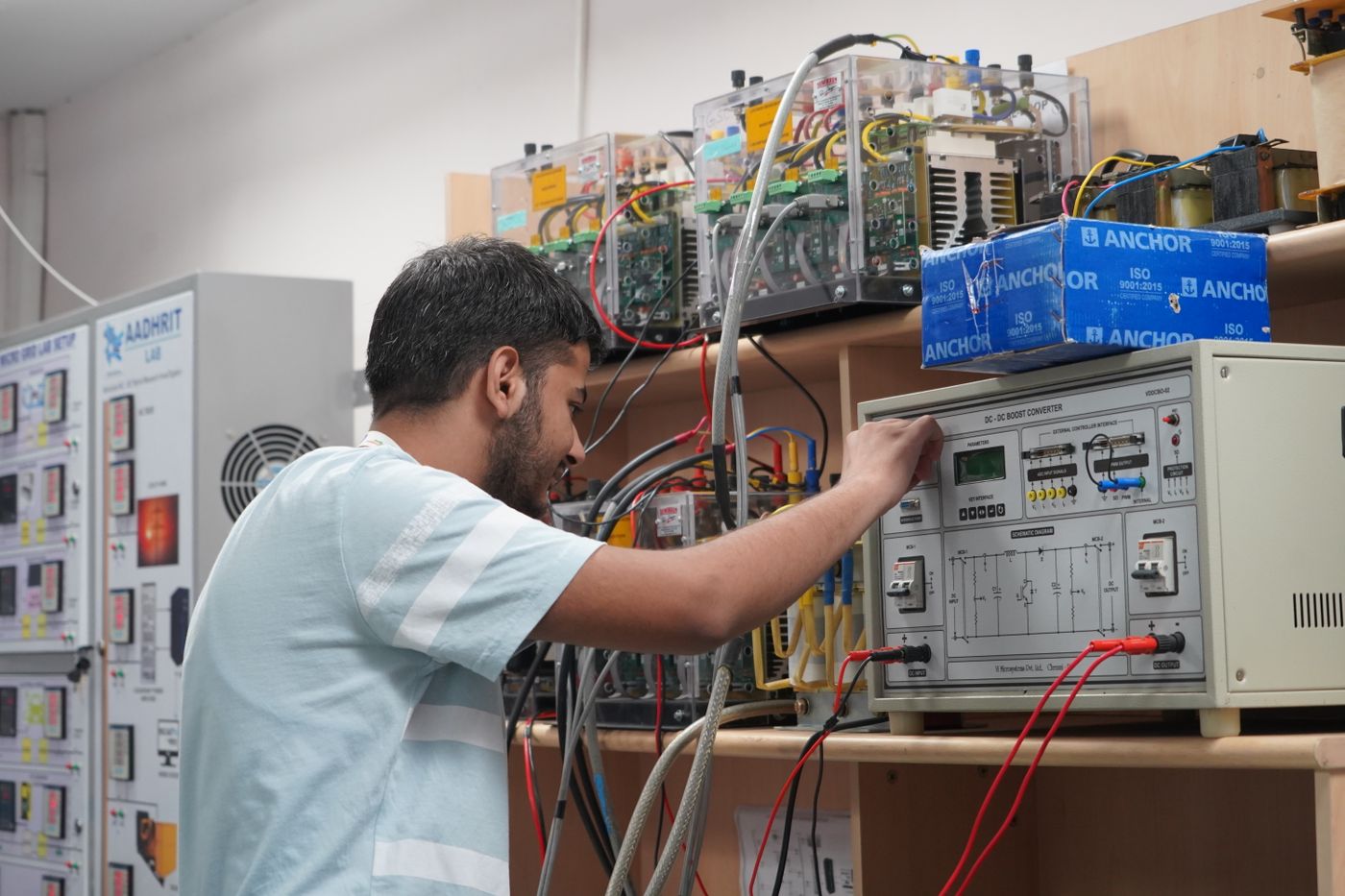
Robotics engineering sits at the intersection of mechanical engineering, electronics, control systems and software. Robotics engineers design, build, program, test and maintain machines that perform physical tasks in manufacturing, logistics, laboratories, healthcare and other environments.
Why this matters in India: industrial robot adoption is expanding. The International Federation of Robotics reported that India installed almost 10,500 industrial robots in 2025, up 15% year on year, and that annual installations grew at an average 27% per year from 2020 to 2025. India remained the sixth-largest market worldwide for annual installations. This is stronger, more current evidence than the original article’s unverified “$7.5 billion by 2030 / 20% CAGR” claim.
What you may work on
- Robot arms and automated production cells
- Sensors, motors, actuators and control systems
- Computer vision and AI-assisted robotics
- Autonomous/mobile robots used in warehouses or inspection
- Testing, safety, reliability and system integration
Skills to start building
- Mathematics and Physics foundations
- Programming in Python and/or C++
- Basic electronics and microcontrollers
- CAD/design thinking and mechanical basics
- ROS 2 (Robot Operating System) concepts; ROS is a robotics middleware/framework, not a programming language
- Problem-solving, debugging and teamwork
Student starting point
Try one physical computing project: for example, a line-following robot, obstacle-avoiding robot, Arduino sensor system or simple computer-vision project. Document what failed, what you changed and what finally worked. That process is exactly what engineering looks like at a small scale.
Indicative salary context: foundit’s 2026 AI-career guide cites roughly ₹5–10 LPA for entry-level robotics engineering roles, with wide variation by degree, industry, location and project depth.
Employers and organisations to explore: robotics/automation firms, automotive manufacturers, industrial engineering companies, logistics automation companies, research organisations and defence/aerospace organisations. Names such as Tata Elxsi, FANUC, GreyOrange, ISRO and DRDO are relevant ecosystem examples, but this is not a statement that each has a current vacancy.
2. AI & Machine Learning Specialist
AI and machine learning specialists build systems that learn patterns from data and use those patterns for prediction, classification, recommendation, language, vision or automation. The work can range from training models and preparing data to evaluating model quality, deploying systems and monitoring how they perform in the real world.
Why it is relevant: the World Economic Forum places AI and machine learning specialists among the fastest-growing job roles through 2030, while foundit’s India tracker reported strong AI hiring activity and projected further growth in 2026. The opportunity is real, but entry-level competition is also increasing—so students need foundations and projects, not only tool familiarity.
Skills you will need
- Python and programming fundamentals
- Algebra, probability, statistics and basic calculus
- Data structures and algorithms
- Machine learning fundamentals before deep learning
- Data cleaning and model evaluation
- Responsible AI, privacy, bias and safe use of AI systems
Using a generative-AI tool is not the same as understanding AI. A strong student portfolio explains the problem, dataset, method, evaluation and limitations—not just the final output.
Indicative salary context: foundit’s 2026 guide lists roughly ₹7–12 LPA for fresher machine-learning engineer roles. Actual compensation varies widely across companies and cities.
Employer types to explore: technology product companies, IT services, analytics firms, fintech, healthtech, e-commerce, education technology and AI startups. The original examples—Google, Microsoft, Amazon, Accenture, TCS and Fractal Analytics—illustrate the kinds of organisations that employ AI talent, but students should check current openings rather than treat a list as live hiring information.

3. Data Scientist / Data Analyst
Data analysts and data scientists turn raw data into usable information. Analysts commonly clean data, create reports and dashboards, study trends and answer business questions. Data scientists often go further into statistical modelling, machine learning, experimentation and predictive systems. The boundaries vary by employer, so students should read job descriptions carefully rather than assuming the titles mean exactly the same work everywhere.
Why it can suit students
- You enjoy numbers, patterns and asking “why did this change?”
- You like combining technical work with real business or research questions
- You want a skill that can be applied in finance, healthcare, retail, manufacturing, education, sports, government and many other sectors
Skills to build
- Spreadsheet fluency and data cleaning
- SQL
- Python or R
- Statistics and probability
- Data visualisation with tools such as Power BI, Tableau or Python libraries
- Clear communication: explaining what the data does and does not prove
Indicative salary context: foundit’s 2026 AI-career guidance places AI-focused data-analyst roles around ₹3–6 LPA and data-scientist roles around ₹6–10 LPA for freshers. Specialised roles and stronger portfolios can differ substantially.
Employer types to explore: IT services, analytics firms, e-commerce, banking/fintech, consulting, healthcare, manufacturing and product companies. The original list—TCS, Accenture, Cognizant, Wipro, Amazon, Flipkart and Mu Sigma—remains useful as an ecosystem reference, not a guarantee of current vacancies.
4. Digital Marketing Specialist (AI-Assisted)
Digital marketing is increasingly data-driven and AI-assisted. Marketers use analytics, automation and AI tools to research audiences, generate or refine content, test advertising variations, improve search visibility, personalise customer journeys and measure campaign performance. The human responsibility remains strategy: deciding what to communicate, to whom, through which channel and how success will be measured.
Why it is different from the other careers here
- It is accessible from Science, Commerce or Humanities backgrounds
- It blends writing, creativity, psychology, business and data
- Students can build evidence through real campaigns, portfolios and analytics rather than waiting for a technical degree
- AI can speed up research and production, but judgment, originality, ethics and brand understanding still matter
Skills to build
- SEO and modern search visibility, including AI-search/GEO awareness
- Content strategy and clear writing
- Social media and paid advertising fundamentals
- Google Analytics/GA4 and spreadsheet analysis
- Experiment design, conversion thinking and campaign measurement
- Responsible use of AI-generated content and disclosure where appropriate
Indicative salary context: foundit’s 2026 guide for students after Class 12 lists many entry-level digital-marketing roles around ₹2.5–6 LPA, depending on specialisation; performance marketing and analytically strong roles may vary more widely.
Employer types to explore: agencies, e-commerce brands, SaaS companies, media companies, startups and in-house marketing teams. The original names—Google, Accenture, Zoho, Adobe, Deloitte, Wipro and Havas Media—are better treated as industry examples than a current “top hiring” list.

5. UX/UI Designer in an AI-Assisted Design World
UX (user experience) and UI (user interface) designers research how people use digital products, structure information, design user flows, create wireframes and prototypes, test usability and collaborate with developers. AI is changing the workflow by helping designers generate alternatives, automate repetitive edits, prototype faster and analyse feedback—but the core job still depends on understanding real users and making thoughtful design decisions.
This is no longer just a theoretical trend. Figma’s 2026 documentation describes AI features for generating and refining designs, prototyping, content replacement, image editing and other workflow support. That makes AI literacy increasingly useful for designers, while user research, accessibility and design systems remain essential human skills.
Skills to build
- Figma and interactive prototyping
- User research and usability testing
- Information architecture and user flows
- Visual hierarchy, typography, responsive design and design systems
- Accessibility and inclusive design
- Basic understanding of HTML/CSS and developer handoff
- Critical review of AI-generated design output
Indicative salary context: foundit’s 2026 fresher-career guide cites roughly ₹5–9 LPA for UX/UI design. Portfolio quality, product experience and location can materially change offers.
Employer types to explore: software/SaaS, e-commerce, fintech, agencies, consulting firms and product startups. The original examples—Google, Microsoft, Adobe, TCS, Accenture, Cognizant, Wipro and IBM—show the range of organisations that employ product/design talent, but vacancies change continuously.

Which careers suit Science, Commerce and Humanities students?
| Stream/background | Strong starting matches | Important note |
|---|---|---|
| Science with PCM | Robotics, AI/ML, data, software, cybersecurity | Many engineering routes require Mathematics/Physics. Verify each institution’s eligibility. |
| Science with PCB | Health-tech data, bioinformatics pathways, digital health, design/marketing roles | Some AI/data routes are possible later, but engineering eligibility may differ without Mathematics. |
| Commerce | Data analytics, fintech-adjacent data roles, digital marketing, product/UX | Statistics, Excel/SQL, economics and business understanding can be powerful foundations. |
| Humanities | UX/UI, digital marketing, content-tech, user research, AI policy/ethics-adjacent pathways | Psychology, sociology, communication, design and research skills can combine well with digital tools. |
| Any stream | Digital literacy, AI literacy, communication, basic data skills and portfolio-building | Your stream influences some degree routes, but it does not define every technology-related career. |
A practical Class 11–12 → emerging-tech career pathway
You do not need to decide the final job title in school. Build transferable foundations first, then specialise with evidence of real work.
What should you start doing in Class 11 or 12?
- Choose one foundation skill for 8–12 weeks: Python, SQL, Figma, analytics, Arduino/electronics or digital marketing basics.
- Build one small project that solves a real or clearly defined problem. Keep screenshots, code, design files or results.
- Write a short project note: problem, method, what worked, what failed and what you would improve.
- Learn to explain your work without jargon. Communication is useful in every career in this article.
- Check degree eligibility and entrance requirements before changing subjects or committing to a college route.
- Repeat the cycle with a slightly harder project instead of collecting many unrelated certificates.
Other emerging technology careers worth exploring
The five careers above preserve the focus of the original article, but the broader technology landscape is larger. The World Economic Forum also identifies fast growth in areas such as big data, fintech engineering, software/application development, information security, autonomous/electric vehicle specialisation and renewable-energy engineering. These are worth exploring if your interests point beyond the five roles covered in detail here.
Common mistakes students should avoid
- Choosing a career only because a salary number looks high. Salary ranges change and are strongly affected by skill level, city, company and experience.
- Treating “AI” as one job. AI includes data engineering, machine learning, computer vision, language systems, research, MLOps, product work and more.
- Assuming certificates equal employability. Employers usually need evidence that you can apply what you learned.
- Ignoring non-technical skills. Analytical thinking, creativity, resilience, communication and collaboration continue to matter alongside technology skills.
- Calling a career “future-proof.” Automation changes tasks inside jobs; adaptability is a safer goal than trying to find a role that can never change.
Key takeaways
What to remember
AI, robotics, data, digital marketing and UX/UI are not five isolated worlds. They increasingly overlap. A robotics engineer may use AI; a marketer may use analytics and automation; a UX designer may work with AI-enabled interfaces; and a data professional may work in almost any industry. For a Class 11 or 12 student, the best strategy is to build strong foundations, test your interests through small projects, verify course eligibility, and keep enough flexibility to specialise later.
Frequently Asked Questions
Which future career is best for a Class 11 or 12 student?
There is no single best career for every student. Robotics suits students who enjoy physical systems and engineering; AI/ML suits strong interest in maths and coding; data suits analytical thinkers; digital marketing suits students who enjoy communication plus analytics; UX/UI suits students interested in design, users and digital products.
Do I need Computer Science in Class 11 or 12 to enter AI?
Not always. Computer Science is useful, but many higher-education routes teach programming from the beginning. Mathematics is especially valuable for technical AI and data-science routes, and individual degree eligibility must be checked separately.
Can Commerce students enter AI or data careers?
Yes, particularly through analytics, statistics, economics, finance, business intelligence and later technical upskilling. Some engineering programmes have specific Science/Mathematics eligibility, so course requirements still matter.
Can Humanities students work in emerging technology careers?
Yes. UX research, UX/UI design, digital marketing, content technology, user research, AI governance/ethics-adjacent work and technology communication can combine humanities strengths with digital skills.
Are AI and automation going to remove all these jobs?
No reliable source supports that conclusion. Technology can automate tasks and also create or expand roles. The World Economic Forum expects substantial job creation and displacement by 2030, which is why adaptable skills and continuous learning matter.
Should I choose a career based on salary?
Salary is one input, not the decision. Use it together with your interests, academic strengths, course eligibility, work style, training cost, location and willingness to keep learning.
What is the most useful thing I can do now?
Build one small project and finish it. A completed project gives you a better signal about whether you actually enjoy the work and gives you something concrete to improve or show later.
References
- World Economic Forum — Future of Jobs Report 2025, Jobs Outlook
- World Economic Forum — Future of Jobs Report 2025, Skills Outlook
- International Federation of Robotics — World Robotics / Industrial Robots
- foundit — Annual Hiring Trends in India 2025
- foundit — Career in Artificial Intelligence After 12th (2026)
- foundit — How to Get an AI Job in India: Skills, Salary & Career Path 2026
- foundit — Digital Marketing Courses After 12th (2026)
- foundit — Highest Paying Fresher Jobs in India (2026)
- Figma — Use AI tools in Figma Design