
Why Class 11 and 12 Students Should Learn Basic Coding Skills in 2026
Basic coding is useful for Class 11 and 12 students because it can build computational thinking, structured problem-solving, pattern recognition, debugging habits, data skills and a better understanding of how digital systems work. It is not compulsory for every career, and it does not automatically improve exam scores or college admission chances. But for students in Science, Commerce or Humanities, coding can become a practical tool for projects, research, automation, data work and responsible use of AI.

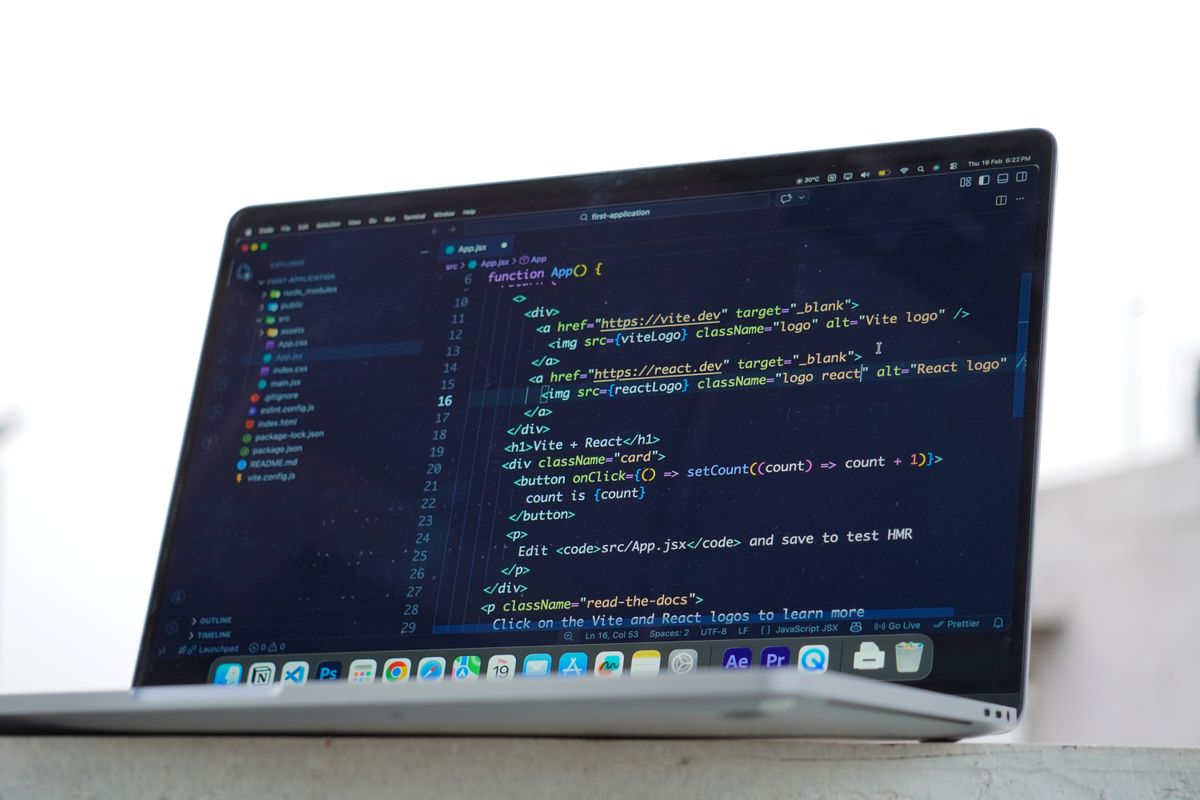
If you are in Class 11 or 12, you are already dealing with questions about streams, board exams, entrance tests, college admissions and future careers. In that situation, learning coding may look like one more subject to add to an already full timetable. The more useful way to think about it is different: basic coding is a digital skill that can help you understand how technology works, break problems into steps and create simple solutions instead of only using ready-made tools.
The original Mass Graduates article makes an important point: coding is not only for computer science or engineering students. Science students can use it for calculations, simulations and data. Commerce students can use it for automation, analytics and business technology. Humanities students can use it for digital research, data handling, storytelling and creative projects. The value comes from how you apply the skill—not from learning code for its own sake.
Coding in the Digital Era
Apps, online classes, digital payments, streaming platforms, websites, recommendation systems and many everyday services are powered by software. Learning even basic coding gives students a clearer view of what happens behind the screen. Instead of remaining only a technology user, you begin to understand how digital instructions are structured, tested and improved.
Coding is therefore not just about writing a program in Python or JavaScript. It also introduces a way of thinking: define the problem, divide it into smaller parts, decide the order of steps, test the result and correct mistakes. CBSE’s Class XI Computer Science curriculum for 2026–27 explicitly includes computational thinking, algorithms, problem-solving steps, testing, debugging and Python programming. [1]
Research broadly supports the original article’s emphasis on thinking skills. A 2024 systematic review and meta-analysis found that coding interventions had their strongest cognitive effect on problem-solving, with smaller benefits for planning and some executive functions. A separate systematic review of K–12 computer science education found overall evidence for gains in computational thinking, with creative and critical thinking also appearing in the literature. These findings should not be interpreted as a guarantee that every coding course improves every student equally; teaching method, practice and project quality matter. [8][9]
When students learn coding well, they can develop:
- Logical and step-by-step thinking
- Problem-solving through decomposition
- Better analytical habits and pattern recognition
- Creativity through building and testing ideas
- Persistence through debugging and revision
Share of surveyed employers identifying skill as core (%)
Why Coding Is Relevant for Students
Starting early gives you time to understand not just how to use technology, but how digital systems are constructed. That shift—from passive user to active creator—is one of the strongest ideas in the original article. You do not need to become a professional developer to benefit from it.
Coding can train students to divide a large task into smaller, manageable steps. It also uses sequencing, pattern recognition and cause-and-effect reasoning. Debugging adds another useful habit: when something fails, you inspect the error, change one part, test again and improve. That cycle can build patience and resilience when students treat mistakes as information rather than as proof that they “cannot code.”
Coding Across Science, Commerce and Humanities
| Stream | How coding can help | Student-friendly examples |
|---|---|---|
| Science | Supports algorithms, data handling, calculations, graphing and simulations. | Plot motion or experimental data, analyse a dataset, automate repeated calculations, build a simple scientific model. |
| Commerce | Adds practical exposure to data, analytics, automation and business technology. | Clean spreadsheet data, automate repetitive calculations, explore sales data, learn basic SQL or Python for analysis. |
| Humanities | Supports digital research, data literacy, text analysis, creative media and structured projects. | Analyse survey responses, organise research data, build a simple website, experiment with digital storytelling or text patterns. |
Coding is not a compulsory requirement for every subject in these streams. The point is that a small amount of programming knowledge can become a flexible tool when a student meets a problem involving data, repetition, logic, digital presentation or automation.

Does Coding Help with Entrance Exams?
The original article stated that JEE, CUET and NDA require strong logical reasoning and implied that coding directly helps with all three. Current official 2026 syllabi do not support that broad claim. Coding can strengthen structured problem-solving, but it should not be presented as a direct requirement for JEE Main or NDA.
| Exam / route | What the 2026 official syllabus says | Where coding fits |
|---|---|---|
| JEE Main 2026 | Paper 1 covers Mathematics, Physics and Chemistry. Coding is not listed as a separate requirement or reasoning section. [5] | Coding may support structured mathematical thinking or personal projects, but it is not a substitute for JEE syllabus preparation. |
| CUET UG 2026 – General Aptitude Test | The syllabus includes General Mental Ability, Numerical Ability, Reasoning, and Logical and Analytical Reasoning. [3] | Coding is not required for the General Aptitude Test, though computational thinking may complement reasoning practice. |
| CUET UG 2026 – Computer Science / Informatics Practices | The subject syllabus includes Python, searching, sorting, data, databases/SQL, Pandas and related topics. [4] | For students choosing this CUET subject, programming knowledge can be directly relevant. |
| NDA & NA 2026 | The written examination has Mathematics and General Ability Test papers. [6] | Coding is not a listed exam paper. Mathematical problem-solving remains the direct preparation priority. |
Coding Builds Problem-Solving Habits
Coding is not only about memorising commands. A useful program begins with a clear problem and a logical plan. When students practise regularly, they learn to analyse problems more deeply, approach challenges step by step, identify patterns and structure, and stay patient when the first solution does not work.
- Analyse the problem before trying to solve it.
- Break a big task into smaller parts.
- Test assumptions instead of guessing.
- Read an error message and trace what caused it.
- Improve a solution after feedback or failure.
In simple terms, computational thinking is a way of solving problems using ideas such as decomposition, patterns, abstraction, algorithms and step-by-step procedures. It is broader than coding itself: coding is one practical way to practise it.
Coding in Modern School Education
The original article correctly reflects a wider educational shift: coding and computational thinking are increasingly present in school education. In CBSE’s 2026–27 senior secondary curriculum, Computer Science and Informatics Practices are available academic electives for Classes XI–XII. The Class XI Computer Science syllabus includes Python, algorithms, problem-solving, testing and debugging; Class XII continues with computational thinking and programming, files, stacks, networks and databases. [1][2]
One claim needs to be softened: it is not accurate to say that “top colleges and universities prefer” all applicants who have coding certificates, project portfolios, coding-event participation or AI knowledge. Admission criteria vary widely. In many Indian entrance-based admissions, official exam scores, eligibility rules and published counselling criteria matter far more than an informal coding certificate. A project portfolio can still be valuable because it demonstrates what you have actually built and learned—but students should never assume that a certificate itself guarantees an admission advantage.
Can Coding Support Academic Learning?
Coding does not automatically improve marks in Mathematics, Science, Commerce or Humanities. Its academic value is strongest when a student uses it to explore the subject instead of treating coding as an unrelated extra course.
| Area | Useful connection | Example |
|---|---|---|
| Mathematics | Variables, functions, operators, sequences, data and plotting can make abstract ideas more concrete. | Write a short program to generate a sequence or plot values of a function. |
| Physics & other sciences | Programming can help visualise data, model simple relationships and repeat calculations accurately. | Plot motion data, compare measurements or simulate a simple rule-based model. |
| Commerce | Data handling and automation can connect with accounting, finance, economics and business analytics. | Summarise transactions, calculate scenarios or explore basic business datasets. |
| Humanities & social sciences | Digital research increasingly involves datasets, surveys, online archives and structured text. | Organise survey results, examine word frequencies or create a digital story/project. |
Coding Connects Students to a Global Learning Community
By entering the world of coding, students gain access to a large international community of creators, developers and learners. The original article highlights four useful entry points: online communities, global learning platforms, student technology events and coding competitions. Used well, these spaces can expose students to new project ideas, peer feedback and collaboration.
- Online learning communities where beginners can ask focused questions
- Global learning platforms with structured coding exercises
- Student technology events, workshops and hackathons
- Coding competitions for students who enjoy timed problem-solving
Students should still protect privacy, follow age requirements and avoid sharing personal information publicly. Networking is useful when it is safe, purposeful and connected to genuine learning.
To explore where technology, AI, data and digital careers can lead, see the Mass Graduates Career Library .

Career Advantages of Basic Coding
Technology now affects healthcare, transport, education, finance, law, media, retail and almost every large industry. That does not mean every job requires programming. It means that the ability to understand data, automation and digital systems can complement many career paths. The World Economic Forum’s Future of Jobs Report 2025 found technological literacy, AI and big data among important or fast-growing skill areas, while programming was one part of a much broader skills mix. [7]
Students who start early can use coding to build practical evidence of learning. The original article suggests freelancing, hackathons, college-application projects and pathways into AI, cybersecurity, data science and web development. Those are real possibilities, but they should be framed carefully:
- Build websites or simple web tools as learning projects.
- Create small app or game prototypes.
- Use Python for simple automation projects.
- Explore creative coding or animation projects.
- Learn enough front-end code to prototype an interface; UI/UX design itself is a separate design skill.
- Join hackathons or coding events when the rules and age requirements are suitable.
- Create a portfolio of projects you can explain, rather than collecting certificates you cannot apply.
- Explore fields such as AI, cybersecurity, data science and web development before deciding whether one is a serious career fit.
Paid freelancing is not automatically available to every school student. Platform rules, minimum-age requirements, contracts, payments and local legal requirements can apply. For Class 11 and 12 students, skill-building and a small portfolio are usually safer first goals than trying to earn immediately.
Coding and AI: Why Fundamentals Still Matter
AI tools can now generate text, images, data summaries and code. That makes coding knowledge more—not less—useful when a student wants to understand, check or improve what an AI system produces. A student who knows the basics can read generated code, identify obvious mistakes, change inputs, test outputs and understand why a result may fail.
Learning coding also supports responsible technology use. Students should think about privacy, plagiarism, copyright, data quality and academic integrity when using AI tools. CBSE’s Computer Science curriculum already places cyber ethics, cyber safety, digital footprints, intellectual property and technology’s role in society alongside programming. [1]
Easier Ways to Start Learning Coding
Compared with earlier years, beginners now have far more ways to practise: interactive platforms, AI-supported tutoring, drag-and-drop programming, beginner-friendly languages such as Python, small projects and gamified exercises. The easiest route is not to learn everything at once. Choose one goal and build a small working project around it.
A Simple Starting Plan for Class 11 and 12 Students
| Stage | What to learn | Small outcome |
|---|---|---|
| Start | Variables, input/output and basic data types | A program that takes input and produces a useful result. |
| Logic | Conditions and loops | A quiz, calculator, number game or simple decision tool. |
| Structure | Functions, lists and dictionaries | A program that organises or processes a small set of data. |
| Application | Choose one stream-related problem | A science graph, commerce data summary, humanities survey tool or simple website. |
| Improve | Testing and debugging | Fix errors, rename unclear variables and simplify repeated steps. |
| Share | Explain the project in plain language | A one-page project note: problem, approach, result, what you learned. |
For CBSE students, Python is a practical first language because it is already used in the Class XI Computer Science and Informatics Practices curricula. Students interested mainly in websites may prefer to begin with HTML/CSS and then add JavaScript. Complete beginners can also start with block-based coding before moving to text-based programming.
Coding Gives You Future-Ready Life Skills
The original article ends with a strong idea: coding can teach habits that are useful beyond programming. The most realistic version of that claim is that good coding practice can give students repeated opportunities to think clearly, solve problems logically, stay patient and handle technical setbacks calmly.
- Think clearly before acting.
- Solve problems logically instead of randomly trying answers.
- Stay patient when a task takes several attempts.
- Handle mistakes as something to diagnose and improve.
- Communicate a solution clearly enough that another person can understand it.
Key Takeaways
- Coding is useful for students across Science, Commerce and Humanities, but it is not compulsory for every career.
- The strongest educational case for coding is computational thinking: decomposition, logic, algorithms, testing and debugging.
- Coding can support subject learning when it is applied to real problems, data or projects.
- For 2026 entrance exams, coding should not be presented as a direct requirement for JEE Main or NDA; CUET General Aptitude includes reasoning, while CUET Computer Science/Informatics Practices includes programming-related content.
- Projects you understand and can explain are more useful than collecting certificates without practical ability.
- AI can help students learn and create, but coding fundamentals make it easier to check, debug and use AI-generated code responsibly.
Frequently Asked Questions
Is coding compulsory for every Class 11 or 12 student?
No. Coding is a useful digital and problem-solving skill, but it is not compulsory for every stream, college course or career. Learn it when it supports your interests, subjects, projects or future plans.
Which coding language is easiest for a school student to start with?
Python is a practical beginner choice because its syntax is relatively readable and it is used in CBSE senior-secondary Computer Science/Informatics Practices. Students focused on websites may start with HTML/CSS and then JavaScript.
Does coding help with JEE, CUET or NDA preparation?
Coding is not a direct syllabus requirement for JEE Main or NDA. CUET General Aptitude includes logical and analytical reasoning, but coding is not required for that paper. Students choosing CUET Computer Science/Informatics Practices will encounter programming and data topics directly.
Can Commerce and Humanities students learn coding?
Yes. Commerce students can apply coding to data, analytics and automation. Humanities students can use it for digital research, surveys, text analysis, websites and creative projects.
Do coding certificates improve college admission chances?
There is no universal rule. Admission systems differ. A certificate may document participation, but official eligibility and entrance criteria remain primary in many Indian admissions. A project you genuinely built can still demonstrate initiative and skill.
Can AI tools teach me coding without a teacher?
AI can explain code, suggest examples and help debug, but it can also produce incorrect or insecure code. Students should test outputs, understand the logic and practise solving some problems without AI assistance.
References
- CBSE Academic, Computer Science (Subject Code 083), Class XI, Curriculum 2026–27. Source
- CBSE Academic, Informatics Practices (Subject Code 065), Class XI, Curriculum 2026–27. Source
- National Testing Agency, CUET (UG) 2026 General Test 501 Syllabus. Source
- National Testing Agency, CUET (UG) 2026 Computer Science/Informatics Practices 308 Syllabus. Source
- National Testing Agency, JEE (Main) 2026 Syllabus. Source
- Union Public Service Commission, NDA & NA Examination (I), 2026 notification and syllabus. Source
- World Economic Forum, Future of Jobs Report 2025. Source
- Montuori C. et al. (2024), The cognitive effects of computational thinking: A systematic review and meta-analytic study, Computers & Education. Source
- Lee S.J., Francom G.M., Nuatomue J. (2022), Computer science education and K-12 students’ computational thinking: A systematic review, International Journal of Educational Research. Source
- Astor K. et al. (2026), Computational thinking: A meta-review of systematic reviews and meta-analyses, Educational Research Review. Source