
CLASS 11 & 12 · PRACTICE QUESTIONS · 2027 STUDY RESOURCES
Best Free Online Practice Question Websites for Class 11 & 12 Students
A checked, practical guide to free and limited-free question banks, official NCERT and CBSE practice, interactive quizzes, and smarter ways to learn from every mistake.

Real Indian students practising with a tutor using a laptop and learning materials. This is illustrative, not a screenshot of any online platform.
Where can Class 11 and 12 students practise questions online for free?
Start with official NCERT Exemplar problems, your textbook exercises, and CBSE sample papers, then use Khan Academy India for guided Maths practice and selected free question sets from providers such as Vedantu. Quiz platforms can help with speed and self-checking, but a free account does not always mean that all tests, explanations, or downloads are free.
| What you need | Recommended starting point | Cost/access note |
|---|---|---|
| NCERT-based Maths/Science concept questions | NCERT Exemplar | Official downloadable learning resource; availability varies by class and subject |
| 2027 CBSE exam-format questions | CBSE 2026–27 sample papers and marking schemes | Free official resources for Class 12 board preparation |
| Maths foundations and guided exercises | Khan Academy India | Free learning and practice; course coverage differs |
| Extra CBSE questions | Vedantu free important-question collections | Selected materials free; some downloads may require sign-in |
| Quick quizzes or teacher-assigned practice | Wayground (formerly Quizizz) | Access varies by quiz and account |
| Build your own test | Google Forms / Testmoz | Free quiz tools; Testmoz free tier has limits |
There is no single website that covers every chapter, all boards and every examination pattern perfectly. Choose one trusted source for your chapter and one method for reviewing incorrect answers.
Why solving questions matters more than endless rereading
Textbook reading builds understanding, but answering questions checks whether you can retrieve an idea and apply it without looking. Regular practice can reveal gaps early and help students adapt to different question formats. It is not a substitute for learning the underlying concept.
- Find out exactly what you remember without notes.
- See the difference between definitions, numerical applications and long answers.
- Locate repeated calculation or interpretation errors.
- Practise making decisions under realistic time limits.
For study methods that combine explanations with questions, read how to study smart instead of hard.
Free vs freemium vs teacher-shared: what the labels really mean
Many pages use “free” to describe a few PDFs or trial quizzes, not unlimited access. Always test the chapter you want before signing up. “Free” also does not automatically mean “official” or “syllabus-aligned”.
| Label | What you can reasonably expect | What to verify |
|---|---|---|
| Official free | Materials released by the education authority | Correct class, subject and academic session |
| Free open practice | Questions accessible without payment | Progress tracking, explanations and chapter scope |
| Freemium | Some questions or PDFs free, others paid | Sign-in, usage caps and restricted solutions |
| Community answers | Student or teacher responses to posted questions | Accuracy, source and completeness |
| Self-made quiz | You or a teacher create the question set | Answer-key accuracy and sharing permissions |
1. NCERT Exemplar: start with official concept questions
The NCERT Exemplar Problems portal provides official practice material in selected subjects. For Class 11 Mathematics, for example, the index lists units such as Sets, Relations and Functions, Trigonometric Functions and Probability. Check the live portal for the specific Class 11 or 12 subject you need rather than assuming every chapter has a matching Exemplar.
- Choose your class and subject from the Exemplar index.
- Attempt a short selection without opening the answer key.
- Compare the answer and explain why each incorrect step failed.
- Record a related textbook example to revisit.
Use the official NCERT textbook portal for the current textbook alongside extra questions.
2. CBSE 2026–27 sample papers: the clearest free exam-pattern resource
For students preparing for the 2027 CBSE board examination, CBSE has published 2026–27 Class 12 sample question papers and marking schemes. The Class 12 official sample-paper page includes Physics, Chemistry, Mathematics, Biology, Economics, Accountancy and other subjects. These materials are more authoritative for format and marking than an unverified “expected questions” list.
- Read the sample paper and its general instructions first.
- Attempt questions in a timed sitting appropriate for the paper.
- Compare your responses with the official marking scheme.
- Make a short list of missing concepts and presentation errors.
The Class 10 2026–27 page and official previous-year paper archive are also useful supporting resources; choose the correct class.
A 2026–27 academic-session label is correct for the 2027 exam cycle. Do not assume a coaching-site “predicted paper” is an official board paper.
3. Khan Academy India: free guided Maths and Science learning
Khan Academy India publishes free India-curriculum resources, including Class 11 and Class 12 Maths. It is a strong choice when you need concept explanations followed by structured practice, with progress features available in the learning environment.
- Choose the Maths topic you are currently studying.
- Attempt exercises before watching the complete solution.
- If you miss a question, review the prerequisite concept.
- Check that the course and language match your syllabus.
It is not a substitute for the exact language and answer-writing requirements of your school’s board paper.
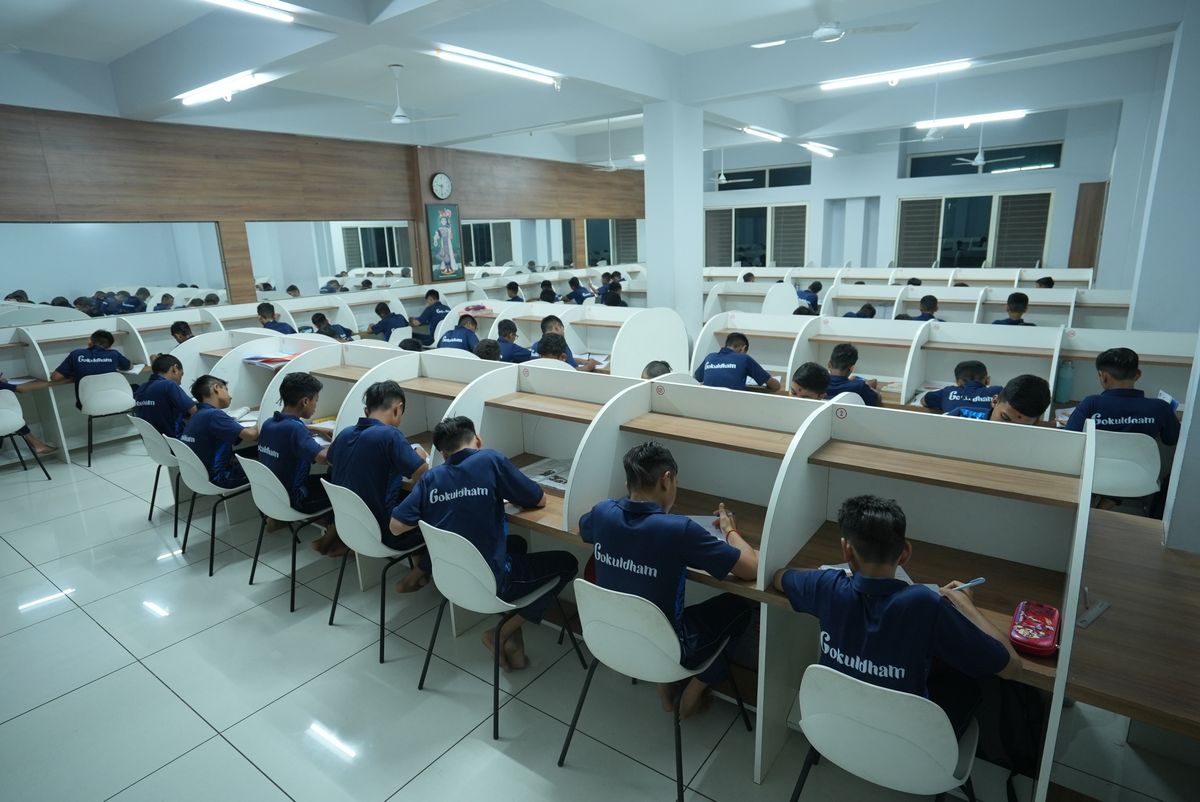
4. Vedantu: extra Class 11 and 12 questions with a free-content filter
Vedantu lists CBSE important-question resources for Classes 11 and 12, including subject-wise collections and free PDFs. This can provide additional exercises after NCERT. Some individual pages may ask you to sign in to download a PDF, and paid teaching products appear elsewhere on the platform.
- Go to the free important-questions area, not an unrelated paid course.
- Check the chapter title against your school textbook.
- Do not rely solely on a page’s prediction that questions are “most likely” to appear.
- Verify doubtful solutions with NCERT or your teacher.
5. LearnCBSE and similar NCERT-solutions sites
LearnCBSE’s chapter-wise previous-year question collections offer third-party revision material. They can be useful for spotting different ways familiar concepts are asked, but are not themselves CBSE or NCERT publications.
- Prefer question sets that identify the textbook or historical paper clearly.
- Write your own answer before revealing the page’s solution.
- Cross-check the marking style against an official CBSE marking scheme.
StudyRankers and other NCERT-solution sites may fill a similar role; verify the page is up to date and the answer is accurate before using it.
6. Testbook: supplementary MCQs and selected free practice
Testbook offers a mixture of practice material and paid test products. Some sample questions may be accessible free, but it would be misleading to treat every full-length test or detailed analysis as free. Use it primarily when short objective questions fit your goal.
- Look for the actual free or sample-test label before starting.
- Check whether the questions are relevant to a Class 11/12 topic or a different competitive exam.
- Do not confuse board-style descriptive-answer practice with timed MCQs.
7. Wayground (formerly Quizizz): interactive class quizzes
Quizizz officially changed its name to Wayground in 2025. The publisher explains that saved quizzes, student access and the underlying service carried over. Teacher-assigned quizzes can make a useful addition to revision, but quiz availability and some features depend on the educator and plan.
Use the official Wayground rebranding explanation for accurate account details, and Wayground to find or join eligible activities.
- Check quiz creator and subject details.
- Use quizzes to identify weak concepts, not to replace full written answers.
- Avoid public quizzes that do not explain their answer key.

8. Google Forms: practise with teacher-created quizzes or make your own
Google Forms is a quiz creation tool, not a verified public catalogue of NCERT questions. Teachers and study groups can create tests with answer keys and feedback for suitable question types, as explained in Google’s official quiz help.
- Collect five to ten reliable questions from NCERT or an official sample paper.
- Create a quiz and set its correct answers and points.
- Attempt it without consulting notes.
- Review the feedback and revisit one weak topic.
Only open quiz links shared by teachers or sources you trust. Avoid forms that unnecessarily demand personal information.
9. Testmoz: build a free mini test from your own questions
Testmoz’s official pricing page says you can build, share and collect responses to basic quizzes for free. The free tier is limited to 50 questions and 100 results per test, with selected features restricted. It supplies the test builder; you must supply suitable questions and verify answers yourself.
| Use case | Recommended mini-test | How to review |
|---|---|---|
| Chemistry | 10 reaction or concept questions | Record the reason for each wrong answer |
| Maths | 8 representative problem types | Check method and units |
| English | 5 grammar tasks and 1 writing prompt | Mark written answers manually against criteria |
| Economics | 10 key terms or application MCQs | Explain each incorrect concept |
10. Brainly: a doubt-solving community, not an official answer key
Brainly contains user-submitted school questions and solutions. It can expose you to alternative explanations, but the quality of community answers varies, and not every explanation or platform feature is freely accessible.
- Attempt the original problem before reading replies.
- Treat votes and popularity as hints, not proof of correctness.
- Use an official textbook, teacher or marking scheme to resolve contradictions.
When practising a calculation, read the method rather than copying only the final answer.
11. Toppr, ExamFear, Meritnation, BYJU’S and Doubtnut: verify legacy links
The source document names Toppr, ExamFear, Meritnation, BYJU’S Practice and Doubtnut as free question platforms. However, current access and service status for these older brands could not be established consistently from authoritative official pages during this review. They should not be recommended as definitely free, fully operational or current without fresh checks.
| Name in older guides | Safer way to use it in 2026–27 |
|---|---|
| Toppr | Check the current destination and whether questions/solutions still work before relying on it. |
| ExamFear | Search by the actual current publisher and verify links; do not assume a historic page is maintained. |
| Meritnation | Check whether the particular practice product and access tier are still available. |
| BYJU’S Practice | Verify current access rather than assuming older free features remain supported. |
| Doubtnut | Check app/web availability and whether explanations are accessible before recommending to students. |
If a legacy service is unavailable, use NCERT Exemplar, official CBSE samples or a verified free exercise resource. Do not waste study time troubleshooting an old platform.
12. Unacademy: free sessions are not the same as a free question bank
Unacademy has offered selected free learning resources and quizzes alongside subscriptions. Availability changes by course and educator. Check the specific current lesson or practice set rather than assuming all exam materials are included without payment.
- Choose a clearly identified subject and syllabus.
- Check the access screen before committing your study plan.
- Use free content as an extra resource, not the only one.
13. Telegram channels and social question collections: apply extra caution
Telegram study channels may circulate daily questions and PDFs, but they are not necessarily accurate, licensed or updated. A freely shared download is not automatically legitimate or trustworthy.
- Prefer materials clearly attributed to official authorities or the original publisher.
- Avoid piracy, leaked-paper claims and paid-course dumps.
- Never share your personal details or payment information for a supposedly “free” answer key.
14. Free mock-test sections: practise timing without confusing patterns
Sample tests from mock-test websites can help with speed and question selection, but their format may differ from your particular board exam. Check the number of questions, negative-marking rule, and whether descriptive writing is assessed. There is no single universal format for all Class 11/12 and entrance examinations.
To compare preparation formats, see Mass Graduates’ mock-test platform guide and board and entrance exam preparation guide.
Which free practice website is best for your subject?
Choose by the skill you need to develop rather than by the number of questions a website advertises.
| Subject/goal | Start here | Add only when useful |
|---|---|---|
| Class 11/12 Maths | NCERT exercises + Exemplar + Khan Academy India | A small timed quiz for weak formula applications |
| Physics and Chemistry | NCERT exercises + suitable Exemplar sets | Vedantu free question sheets for extra scenarios |
| Biology | NCERT-based concept questions + official examples | Selected MCQs, with explanations checked |
| Accountancy and Economics | School textbook + CBSE Class 12 SQP where applicable | Subject-wise free important questions |
| English | Prescribed text + sample-paper comprehension/writing tasks | Teacher-shared quizzes for grammar |
| CUET / JEE / NEET basics | Relevant official syllabus + conceptual exercises | Exam-specific practice with the current approved pattern |
A student preparing for two examinations should keep the pattern requirements separate: NCERT concept practice is not the same as a timed entrance-exam simulation.
The 30-minute question-practice routine
A short session is often easier to repeat than an open-ended marathon. The example below is flexible: difficult numerical subjects or descriptive writing may need longer sessions.
| Time | Action | Check |
|---|---|---|
| 3 minutes | Choose one chapter and one question type | Goal is specific |
| 18 minutes | Solve without notes | Show method/working |
| 6 minutes | Check solutions and mark mistakes | Record the error type |
| 3 minutes | Write a correction and next target | Next session already defined |
Instead of “practise Chemistry online,” write “solve five equilibrium MCQs, explain two errors, and revise the relevant NCERT paragraph.”
Use an error log so free practice actually improves understanding
After each set, classify errors as a concept gap, calculation slip, question-reading mistake or time-management issue. Then choose one targeted correction rather than redoing every question immediately.
| Question | Error type | Correction | Retest date |
|---|---|---|---|
| Vectors example 4 | Concept | Revisit direction and components | After two days |
| Accountancy journal entry | Sign/format | Rewrite debit–credit logic | Next study session |
| English inference question | Misread prompt | Underline command words | Weekend |
For better note organization, see our digital notes and mind-maps guide.
A simple seven-day practice plan for Class 11 and 12
Use this as an illustrative routine, not a fixed prescription. Select question sets from your current textbook and verified websites.
| Day | Main task | Review action |
|---|---|---|
| Monday | Maths or Accountancy applications | Fix two method errors |
| Tuesday | Science concepts or Economics definitions | Retest without hints |
| Wednesday | English reading and writing | Check with rubric |
| Thursday | Weakest chapter | Record misconceptions |
| Friday | Mixed short-answer/MCQ set | Improve accuracy |
| Saturday | One official sample-paper section | Compare marking points |
| Sunday | Review only the recurring mistakes | Plan next week |
Common mistakes when using free question websites
- Opening five websites but completing no exercise.
- Assuming an internet answer must be correct.
- Only reading solved examples instead of attempting questions.
- Using predicted questions as a substitute for the current syllabus.
- Treating a free trial as an unrestricted free course.
- Skipping long-answer practice because MCQs feel quicker.
- Not keeping a record of recurring errors.
Students may find our board-exam preparation mistakes guide useful alongside this checklist.
How to verify a question, answer and website before trusting it
- Confirm the publisher and the exact Class 11/12 subject.
- Check that the question matches your current textbook or official syllabus.
- Attempt the question before viewing any worked solution.
- Cross-check unusual answers using another independent credible source.
- If a link requires a subscription, label it paid/limited rather than “free.”
- For board marking, prioritize the actual official marking scheme.
For official 2027 preparation, the CBSE 2026–27 sample-paper index remains a useful baseline, especially for Class 12.
Is solving more questions always better?
No. The quality of retrieval, feedback and correction matters. Solving 15 thoughtful, syllabus-relevant questions and understanding your mistakes may be more useful than rushing through 100 unrelated MCQs. The ideal amount depends on subject, question difficulty and available time.
Combine a textbook explanation, targeted questions and delayed retesting. Keep actual learning progress separate from badges or leaderboard points.
Frequently asked questions about free online practice questions
Short answers to help you select resources without wasting preparation time.
What is the best completely free website for Class 11 Maths questions?
Start with the official NCERT textbook and Exemplar material, then Khan Academy India for additional guided Maths practice. Match the chapter with your current syllabus.
Are CBSE 2026–27 sample papers free?
Yes. CBSE Academic publishes Class 10 and Class 12 sample question papers and marking schemes for the 2026–27 examination session, which supports 2027 preparation.
Does Khan Academy India provide free Class 12 practice?
Khan Academy India offers free Indian-curriculum content including Class 12 Maths; check the relevant course and topic for specific exercises.
Are all Vedantu practice questions free?
No. Selected important-question pages and PDFs are offered free, while some pages require sign-in and other Vedantu services are paid.
Is Quizizz still available in 2026?
Quizizz changed its name to Wayground. Its official help center explains that the accounts and underlying service remain, with wayground.com as the updated website.
Can I trust Brainly answers for board-exam preparation?
Use Brainly for ideas and alternate explanations, but verify answers against NCERT, official marking schemes or your teacher.
Is Toppr still a reliable free practice website?
Do not assume that an older Toppr article or app is currently maintained or free. Check the live product before depending on it.
Can I create practice tests in Google Forms without paying?
Google Forms supports quiz creation and answer keys. You must supply the questions and verify the answers yourself.
Does Testmoz have a free plan?
Yes. Testmoz lists a free basic option, with 50 questions and 100 results per test as free-tier limits.
Should I only practise MCQs for board exams?
No. Use the formats required by your examination, including numerical steps, case questions and descriptive answers where applicable.
How many practice questions should I solve each day?
Choose a manageable amount matched to the subject and your available time. Review incorrect answers before increasing volume.
Are questions from Telegram channels safe to use?
Verify the original source and syllabus relevance. Avoid leaked-paper claims, pirated materials and suspicious forms requesting personal information.
Final takeaway: one reliable source, regular practice and reflection
The best free online practice websites are the ones that fit your subject, explain your errors and help you return to difficult concepts. Begin with official NCERT material and published CBSE papers, use supplementary tools selectively, and keep an honest record of what you are improving.
Choose one chapter today, solve a small question set and write down your next correction. Consistent learning matters more than how many platforms you visit.