
Top Board Exam Preparation Mistakes Students Make — and How to Avoid Them

In this guide
Quick answer
The biggest board-exam preparation mistakes are starting late, studying without a realistic plan, letting anxiety dominate preparation, ignoring the official syllabus, depending on last-minute cramming, and cutting sleep. The better approach is simple: use the official syllabus as your boundary, plan small study blocks, practise active recall and sample questions, revise across multiple days, protect sleep, and adjust the plan when life does not go exactly as scheduled.
Board exams can feel like a massive hurdle for Class 10 and Class 12 students because they combine a large syllabus, fixed deadlines and pressure to perform. But the syllabus itself is not always the biggest problem. The way students prepare can create avoidable difficulty: delayed starts, random studying, too much passive reading, last-minute revision, poor sleep and unrealistic expectations.
The good news is that these are preparation problems, which means they can be changed. This guide keeps the practical ideas from the original Mass Graduates draft but updates the evidence and removes promises that any single technique will automatically produce “top marks”. A strong routine improves your preparation conditions; your result still depends on subject knowledge, practice quality, exam-day performance and individual circumstances.
— and the Better Move for Each One
Procrastination
Start with a small, specific task
No clear plan
Plan subjects, topics, revision and breaks
Stress & overthinking
Use slow breathing, realistic self-talk and support
Ignoring official syllabus
Use your board syllabus and official sample papers
Last-minute cramming
Use spaced review and active recall
Cutting sleep
Protect age-appropriate sleep and recovery
Figure 1. Six common board-exam preparation mistakes and the practical move that replaces each one.
| Mistake | What usually happens | Better move |
|---|---|---|
| Procrastination | The start keeps moving to “tomorrow”. | Shrink the first task and begin with a defined 20–30 minute block. |
| No plan | You switch subjects randomly and lose revision time. | Plan topics, practice, revision and breaks before the day begins. |
| Stress & overthinking | Worry consumes attention and makes starting harder. | Use slow breathing, realistic self-talk and support; seek help if anxiety is severe or persistent. |
| Ignoring official syllabus | Time goes into material outside the prescribed scope. | Use your board’s official syllabus and official sample papers/marking guidance where available. |
| Last-minute cramming | Too much material is packed into one short window. | Use spaced revision and retrieval practice across several days or weeks. |
| Cutting sleep | More study time is gained by sacrificing recovery. | Protect age-appropriate sleep; for ages 13–18, guidance is 8–10 hours per 24 hours. |
1. Procrastinating Until “Tomorrow”
The original draft describes a familiar pattern: you know you need to start, but “I’ll do it tomorrow” keeps repeating until the exam is suddenly close. Digital distractions—social media, streaming, messaging and short-form video—can make that pattern easier to fall into, but procrastination is not always simple laziness. A task may feel too large, unclear, boring or emotionally uncomfortable, so the brain keeps choosing an easier activity instead.
How to reduce procrastination
- Choose a calm study place and remove the easiest distractions before you begin. Silence non-essential notifications or place the phone out of reach when it is not needed for study.
- Break a large syllabus into chapters, then convert each chapter into small actions: “read pages 20–28,” “solve 15 questions,” or “recall five formulas without notes.”
- Use a short time-box if starting feels difficult. A 25-minute study block followed by a short break is one practical option, not a universal scientific rule. Adjust the length to the subject and your attention span.
- If music or calming sound helps you concentrate, keep it low and non-distracting. If it pulls attention away, study in silence.
- Define the next action before you stop: knowing exactly what comes next makes restarting easier.
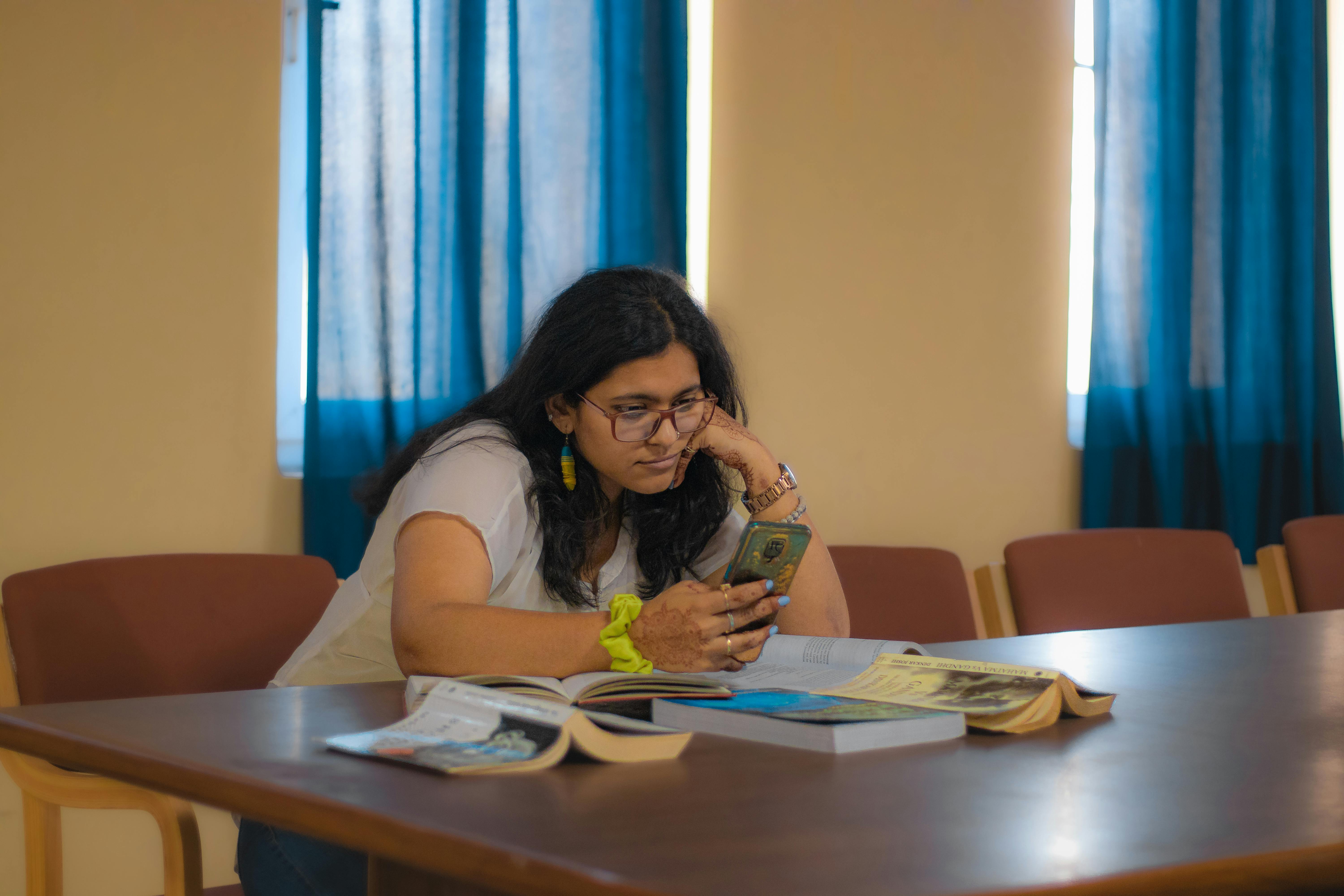
A useful anti-procrastination rule
Do not ask, “Can I finish the whole chapter now?” Ask, “What is the smallest useful action I can complete in the next 20–30 minutes?” Starting is often easier when the task has a visible finish line.
2. Studying Without a Proper Plan
Sitting down to study without knowing where to begin wastes decision-making energy. Students may jump from one subject to another, spend too long on comfortable chapters, forget revision, or realise late that an important topic has not been practised. A plan is useful because it converts “study everything” into a sequence of decisions already made.
Build a plan you can actually follow
- Create a weekly plan that names the subject, specific topic, type of work and approximate study block.
- Include revision sessions instead of using every block for new learning.
- Give extra time to weak or high-demand topics, but do not treat unofficial “chapter weightage” lists as permission to skip prescribed syllabus content.
- Keep buffer time. If one session runs late or school work changes, move the task instead of abandoning the entire plan.
- At the end of each day, mark what was completed and move only the unfinished essentials forward.
For CBSE students, the official CBSE Academic site currently provides the 2026–27 curriculum and Sample Question Papers (SQPs) for Classes X and XII. CBSE describes SQPs as a broad template for question-paper design and curriculum coverage. Students following other Indian boards should use the equivalent official board website rather than assuming CBSE guidance applies to them. [1]

3. Letting Stress and Overthinking Control Preparation
Board-exam pressure is real. A moderate level of nervousness can occur before an important test, but high test anxiety is associated with poorer educational performance. A meta-analysis covering 238 studies found a significant negative relationship between test anxiety and outcomes such as standardised tests, entrance exams and grade-point average, although the size of the relationship varied. [2]
The goal is not to force yourself to feel perfectly calm. It is to keep anxiety from deciding what you do next.
Practical ways to manage exam pressure
- Use slow, controlled breathing when stress rises. A systematic review of breathing interventions found that many regulated-breathing approaches reduced stress or anxiety; effective programmes were generally not built around very short, fast-only breathing sessions. [3]
- Replace catastrophic self-talk (“I will fail everything”) with realistic instructions such as “I can do the next question,” “I know what I need to revise,” or “I can improve this topic with practice.”
- Talk to a parent, teacher, friend, counsellor or another trusted person when pressure feels heavy. Support can help you organise the problem instead of carrying it alone.
- If anxiety is intense, persistent, causes panic, disrupts sleep for long periods, or makes normal daily functioning difficult, seek appropriate professional support rather than relying only on study tips.
4. Ignoring the Official Syllabus
The original article is right to treat the syllabus as a roadmap, but one detail needs care: a syllabus tells you the prescribed scope; it does not always tell you that a topic can safely be “skipped” simply because a coaching site calls it low weightage. Third-party notes, videos and reference books can help, but they should not replace the official syllabus and official exam materials.
What to do instead
- Download the current syllabus from your own board’s official website.
- Turn each unit/chapter into a checklist and mark: not started, learning, practised, revised.
- Use official sample papers, specimen papers or marking schemes where the board provides them.
- Prioritise weak and important areas, but keep full prescribed-syllabus coverage in view.
- Use reference books only after you know what the official syllabus actually requires.
CBSE-specific 2026–27 note
CBSE Academic currently lists the detailed 2026–27 curriculum and Sample Question Papers for Classes X and XII. This is useful for CBSE students only; students under state boards, CISCE or other boards should use their board’s current official material.
5. Depending on Last-Minute Revision
Trying to push a large amount of material into the final night can feel productive because everything is fresh in the moment. The problem is that immediate familiarity is not the same as durable recall. Research on retrieval practice consistently shows that actively recalling information strengthens later learning more effectively than simply reading the same material again. [4] Research on distributed, or spaced, practice also shows better long-term retention when learning is spread across time instead of massed into one session. [5]
A better revision pattern
- Start revision early enough to revisit important material more than once.
- Use active recall: close the book and explain the idea, write the formula, draw the diagram or answer a question from memory.
- Use practice questions and official/sample papers to test whether you can apply the concept.
- Space the next review: for example, revisit a weak topic after a day or two, then again later in the week, instead of repeating it continuously in one sitting.
- Use the final day for light recall, key formulas, definitions, exam logistics and rest—not for trying to learn an untouched syllabus.
6. Cutting Sleep to Create More Study Hours
Studying late into the night can create the impression that you are gaining extra preparation time. But sleep is part of learning, not time stolen from it. Sleep supports attention and readiness to learn, and research reviews describe an important role for sleep in consolidating recently acquired memories. [6]
Figure 2. Most Class 10 and Class 12 students fall within the adolescent age range; CDC/AASM guidance recommends 8–10 hours of sleep per 24 hours for ages 13–18.
This corrects the original draft’s “around 7–8 hours” recommendation. Sleep needs vary, and students older than 18 should follow age-appropriate health guidance. The practical point remains the same: repeatedly sacrificing sleep to study can make concentration, mood and learning harder. [7]
Protect sleep without losing study momentum
- Build study hours earlier in the day rather than treating late-night time as your main revision window.
- Take short breaks between demanding blocks; a brief walk or stretch can help you reset.
- Keep a consistent sleep and wake time when possible, especially in the final revision period.
- Avoid turning the night before an exam into a marathon study session. Prepare materials, set alarms and stop at a planned time.
A Better Board-Exam Preparation System
The six mistakes are connected. Procrastination creates a rushed plan; a rushed plan encourages cramming; cramming pushes study late into the night; sleep loss makes focus harder; poor focus increases stress. The solution is not six separate “hacks”. It is one repeatable system.
Figure 3. A repeatable board-exam preparation cycle based on the article’s original advice plus evidence-based retrieval and spacing.
A Simple Daily Checklist
- I know the exact topic I will start with.
- I have at least one practice or recall task, not only reading.
- I have a realistic stop time and break plan.
- I checked whether I am following the current official syllabus.
- I know which weak area needs the next revision.
- I have protected enough time for sleep.
Key Takeaways
What matters most
Board-exam preparation becomes more manageable when you replace vague effort with a system: start small, plan realistically, study the official syllabus, practise retrieval, revise across time, manage stress, and protect sleep. None of these steps guarantees a particular score, but together they reduce avoidable preparation mistakes and make your study time more purposeful.
Frequently Asked Questions
What is the biggest mistake students make during board-exam preparation?
There is no single biggest mistake for every student. Starting too late, studying without a plan, relying on passive reading, ignoring the official syllabus, cramming and cutting sleep are all common problems. The most useful first step is to identify which one is currently costing you the most time or marks.
How can I stop procrastinating when the syllabus feels too large?
Reduce the starting task. Choose one chapter, then one specific action such as solving 10 questions or revising one concept for 25 minutes. A small defined task is easier to begin than “finish the syllabus”.
Is the Pomodoro Technique necessary for board exams?
No. A 25-minute study period plus a short break is only one time-management option. Longer blocks may suit numerical practice or writing. Use a block length that helps you maintain attention and complete meaningful work.
Should I study only high-weightage chapters?
No. Use the official syllabus as the boundary and your board’s official sample/specimen papers where available. Prioritising weak or high-demand topics can help allocate time, but unofficial weightage lists should not be used as a reason to ignore prescribed content.
How many hours should a Class 10 or 12 student sleep?
For adolescents aged 13–18, CDC and American Academy of Sleep Medicine guidance recommends 8–10 hours of sleep per 24 hours on a regular basis. Individual needs vary, and students older than 18 should follow age-appropriate guidance.
Is reading notes again enough for revision?
Reading can help review, but stronger revision includes retrieval: try to recall the answer, explain the concept without notes, solve questions, or reproduce formulas and diagrams from memory. Spacing these recall attempts across time supports longer-term retention.
References
- 1. CBSE Academic — Curriculum and Sample Question Papers 2026–27. Source — Official CBSE source; relevant specifically to CBSE Classes X and XII.
- 2. Test anxiety effects, predictors, and correlates: a 30-year meta-analytic review. Source — Meta-analysis of 238 studies.
- 3. Breathing Practices for Stress and Anxiety Reduction: systematic review. Source — Review of regulated breathing interventions.
- 4. Practicing Retrieval Facilitates Learning. Source — Annual Review of Psychology review of retrieval-based learning.
- 5. Distributed practice in verbal recall tasks: a review and quantitative synthesis. Source — Large quantitative review of spacing effects.
- 6. Memory consolidation during sleep: a facilitator of new learning?. Source — 2026 review of sleep-associated memory consolidation and learning.
- 7. CDC — Sleep for high school students / adolescents. Source — CDC states adolescents aged 13–18 should generally get 8–10 hours of sleep per night, citing AASM guidance.
Original reference links supplied with the draft (retained for provenance):
- https://www.samglobaluniversity.ac.in/top-5-mistakes-class-12th-students-should-avoid-during-board-exam-preparation/
- https://matanandkaur.com/blog/top-9-tips-to-overcome-board-exam-stress-and-anxiety/
- https://jdcs.in/top-10-mistakes-students-make-while-preparing-for-competitive-exams/
- https://store.pw.live/blogs/school-exams/7-common-mistakes-to-avoid-in-cbse-class-10-board-exam
- https://www.21kschool.com/in/blog/how-to-prepare-for-board-exams/